
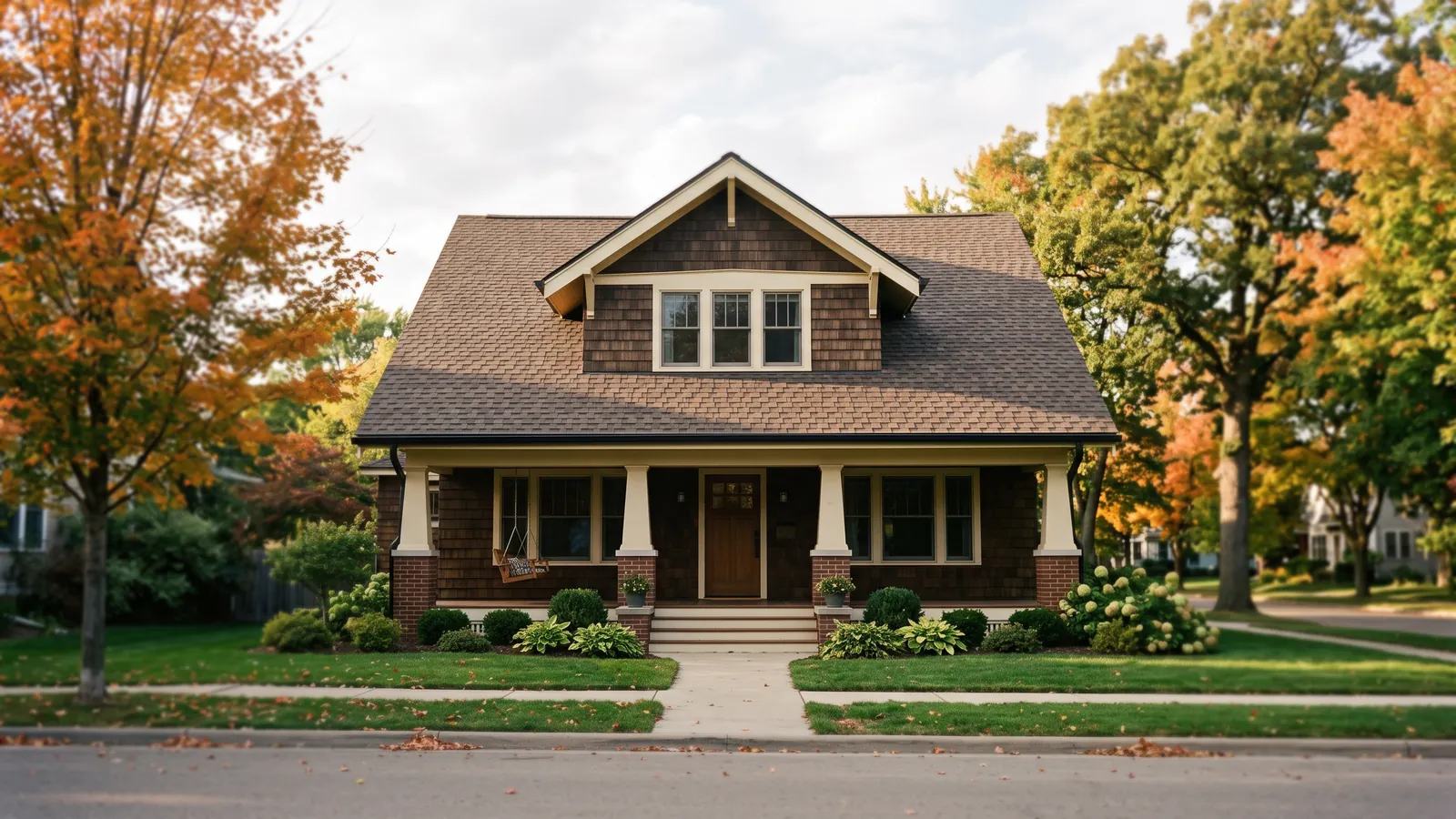
Types of Storm Damage to an Ann Arbor Roof
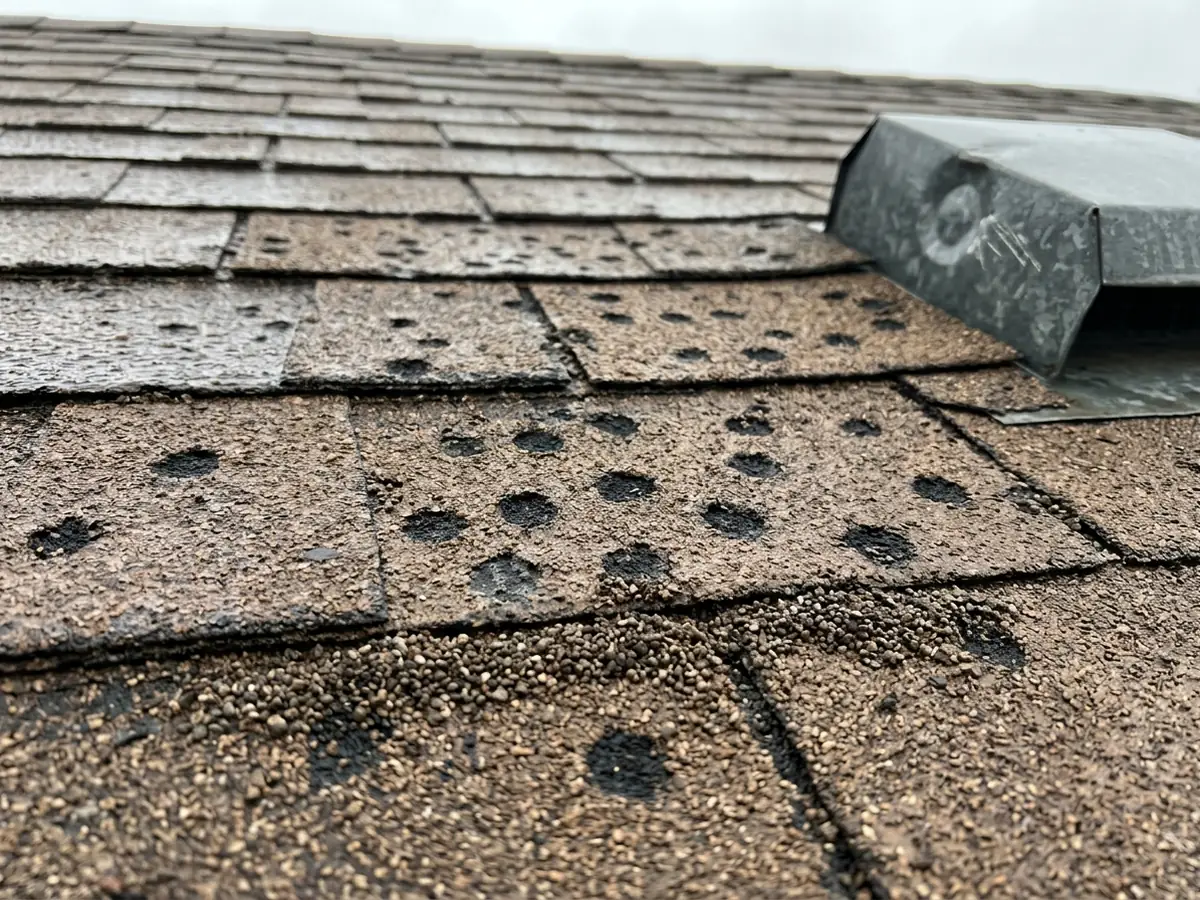
Hail Damage to Shingles
Hail is common here. Counting NOAA's Storm Events records for Washtenaw County, 2015 through 2024, we find 60 hail reports, 44 of them an inch or larger, with 16 in 2023 alone. Ten reports in that period carry an Ann Arbor location, up to 1.5 inches. On July 20, 2023, a supercell dropped 1.5-inch hail in Ann Arbor and 2-inch hail in Ypsilanti, and the same storm caused "widespread hail damage to vehicles, homes, and businesses" farther north.
On asphalt shingles, hail knocks granules off and bruises the mat underneath. The spot looks dark and round, and it can feel soft. Nothing leaks that day. As we see it, bare asphalt ages faster in the sun, so a bruised shingle tends to crack and leak well before its neighbors. What impact-rated (Class 4) shingles do about it is on asphalt shingle roofing.
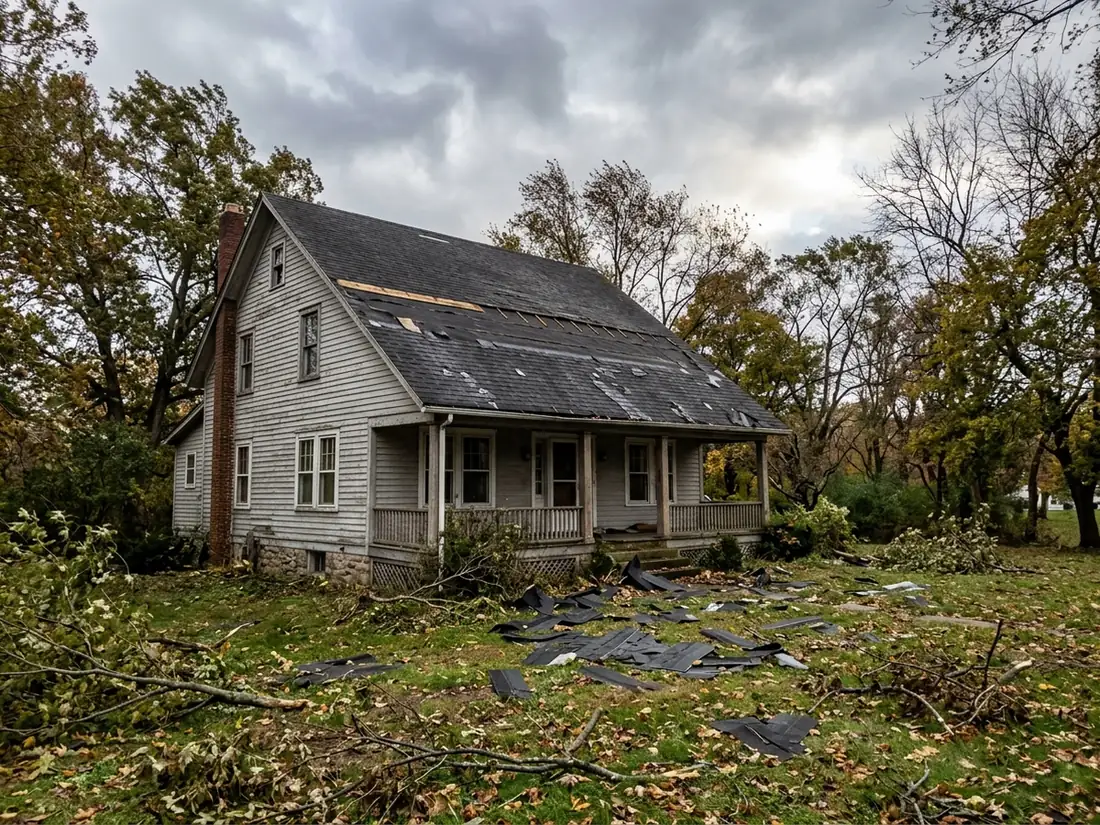
Wind Damage and Blown-Off Shingles
NOAA lists 81 thunderstorm wind reports in Washtenaw County over the same ten years, 16 of them in 2023. On August 24, 2023, winds estimated at 61 knots (about 70 mph) hit Ann Arbor, with "large trees reported blown down on cars and streets." In June 2015 an EF1 tornado north of the city, peaking near 100 mph, damaged "roofing and siding material of homes" along its path. For comparison, Michigan's residential code designs houses here for a 90 mph wind.
Wind works on edges first: rakes, eaves, ridge caps and any shingle whose seal strip never bonded. Tabs fold back, crease and either tear off or drop back into place looking fine. The creased ones count as damage too, and an inspection should mark them, not just the bare spots.
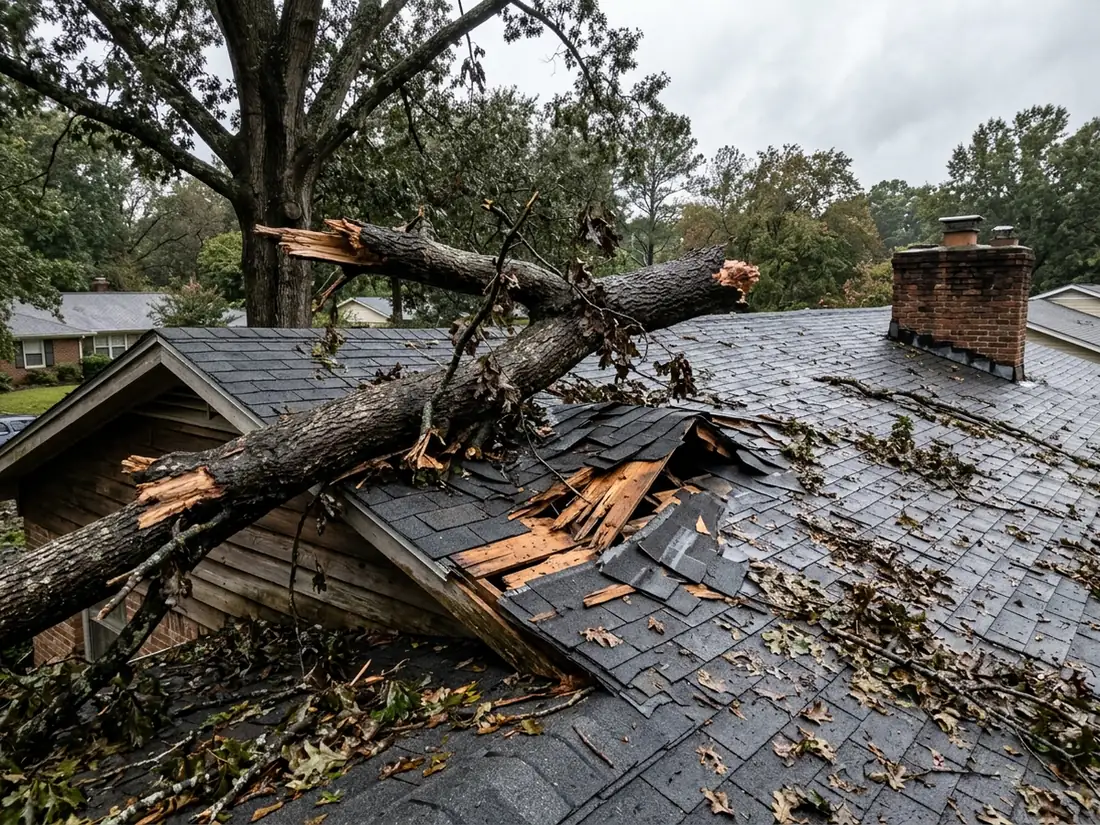
Fallen Trees and Limbs
Ann Arbor's mature canopy is lovely until a storm. Limbs puncture the deck, crack rafters and tear gutters off on the way down. Ice adds its own weight: the February 22, 2023 ice storm is recorded with $8 million in property damage across the county zone.
Homeowners policies generally cover tree damage to the house when a storm brought the tree down, including a neighbor's tree, less your deductible. A tree that fell because it was dead or rotting may not be covered. Get the tree off the roof and the hole covered first; that's the first-day work on our emergency roof repair page. The structural repair comes after the adjuster has seen it.
Documenting an Insurance Claim
Michigan's Department of Insurance and Financial Services lists a damaged roof among the losses a homeowners policy may cover. Once you file, the insurer has 30 days to tell you what information it needs, and it must pay within 60 days of receiving proof of loss, with 12% simple interest owed on late amounts. The state's insurance help line is 877-999-6442.
What makes that proof easy:
- Photos before anything moves. Wide shots of each slope, close-ups of bruises and creased tabs, dented gutters and vents, and any interior stains.
- The date and the storm. Note which storm it was. NOAA's records list hail size and wind by date if the adjuster asks.
- A written estimate that lists storm damage separately from wear.
- A call log. The Michigan Attorney General's advice is to write down whom you talked to at the insurer, when, and what they said.
Checking a Contractor After a Storm
Storms bring door-knockers. Michigan's Attorney General warns against anyone pushing you to sign "right now," and says legitimate contractors expect you to check them out first. Get every promise in writing, never pay in cash, and never pay in full up front; a credit card lets you dispute a charge if the work isn't finished.
Roofing in Michigan is a licensed trade. It falls under the maintenance and alteration contractor licence, or a residential builder licence, and the law requires one on any job of $600 or more. To check, ask for the 10-digit licence number and look it up on LARA's site under "Verify A License," then "Construction: Residential Builders, Electricians, Plumbers, Etc."
Why Ann Arbor homeowners call Ann Arbor Roofing Co.
- Written estimate, free of charge
- Shingle line, underlayment and ice barrier named in the price
- Deck repair priced per sheet before the tear-off
- One independent local roofer per request, not a call list
- No fee to the homeowner for the referral
Repair or Replace After Hail and Wind?
It comes down to how much of the roof the storm reached. A few torn tabs, a dented vent or one punctured spot from a limb is a repair. Bruising spread across whole slopes is a replacement, because patching dozens of hail hits on an aging roof leaves you with a roof that still wears out early.
Matching is the practical problem with partial work. Shingles fade, lines get discontinued, and a new section beside a ten-year-old one can look patched; the trade-offs are on the roof replacement page under partial and section replacement. Ask the contractor to say in the estimate whether matching shingles are available, since the adjuster will want to know too.
How Soon Should a Roof Be Inspected After a Storm?
Our view: within a few days of hail an inch or larger, or wind strong enough to bring down limbs, even if nothing leaks. Hail bruises and creased shingles often take months to leak, and by then it's harder to show which storm did it. Michigan insurers can only start their 30-day and 60-day clocks once you've filed.
A storm inspection covers the slopes, the edges, the attic and the metal: vents, flashing and gutters, which show dents more clearly than shingles do. If the inspection finds only a few damaged pieces, a spot repair is the answer; see roof repair in Ann Arbor. If damage covers whole slopes, the insurer may pay for roof replacement instead, and the permit and tear-off rules there apply. For the inspection itself, outside of a claim, see roof inspection.