
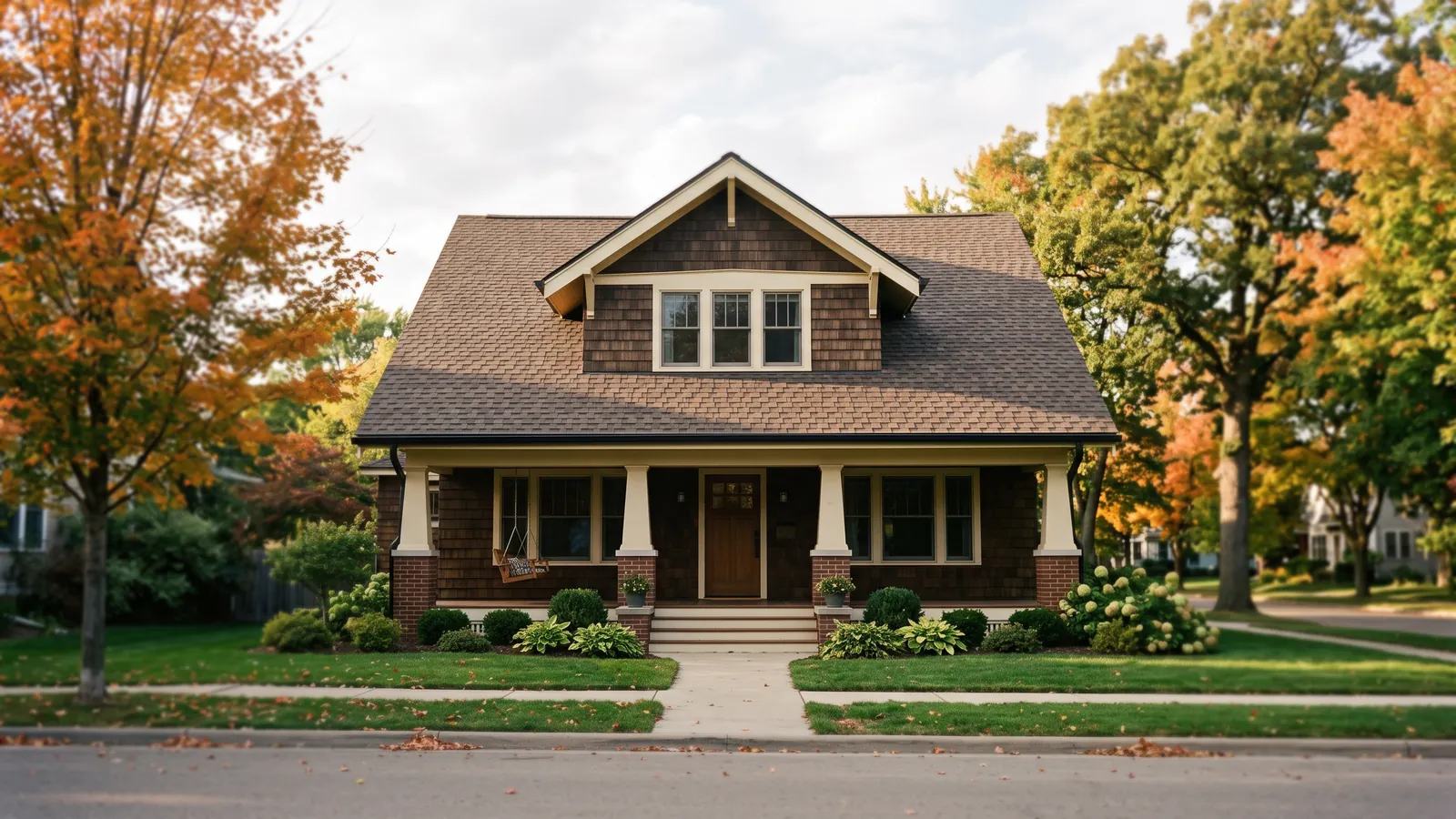
Skylight Types for Pitched and Low-Slope Roofs
A skylight is a window in the most exposed part of the house. It has to keep water out under snowmelt and driving rain, hold heat in a Michigan winter, and carry the load of whatever lands on it. The type that fits depends on the roof pitch, the room below and whether there's an old opening to reuse.
Deck-Mounted Skylights
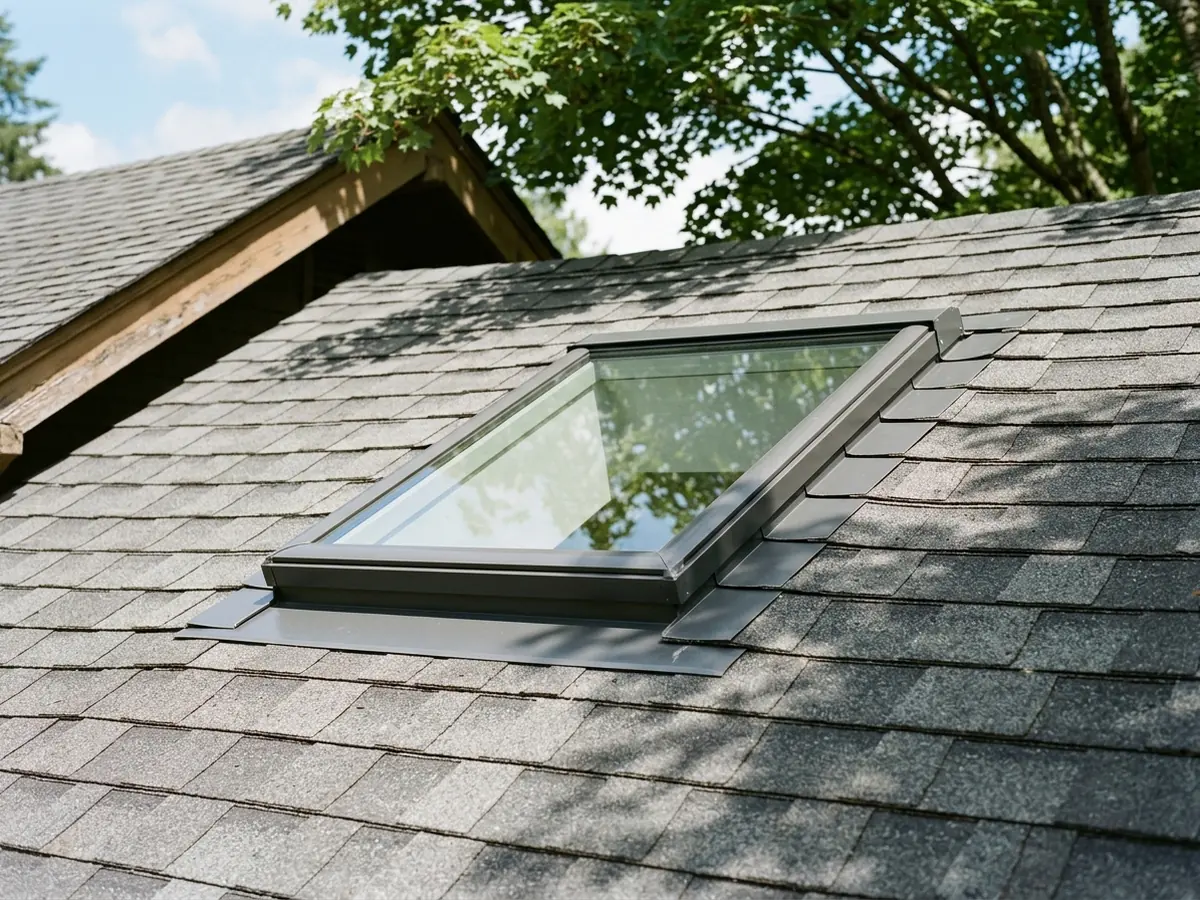
Most new skylights on shingle roofs are deck-mounted: the frame screws straight to the roof deck and sits close to the surface. HomeGuide notes that deck-mounted units sit flush with the roof but take longer to install than curb-mounted ones. The flashing kit is the point. It's a set of matched pieces from the skylight maker: a head flashing at the top, step flashing up each side woven into the shingle courses, and a sill flashing at the bottom, often with a self-adhering underlayment collar around the frame first.
Michigan's code lets a skylight installed and flashed to the maker's instructions go without a cricket on its uphill side, even when it's wider than 30 inches. A deck-mounted unit set with the kit thrown out and a bead of roof cement around the frame is a leak waiting for its first ice dam.
Curb-Mounted Skylights
A curb is a wooden box built on the roof around the opening, flashed like a little chimney, with the skylight sitting on top. HomeGuide calls curb-mounted units the easier install. They're the standard on flat and low-slope roofs, where water moves slowly and needs to be held back from the glazing. Michigan's code requires a curb at least 4 inches high for unit skylights on any roof flatter than 3:12, unless the maker's instructions say otherwise.
Curb mounting also suits replacements. An older skylight may sit on a site-built curb, and a new curb-mounted unit sized to it avoids reframing the roof and the ceiling below. On a flat roof, the curb gets wrapped in the membrane, not just sealed to it.
Venting Skylights
Venting skylights open. Manual units use a pole and crank; electric units run on a wall switch or remote; solar-powered ones charge their own battery and need no wiring. Some electric and solar models close themselves when a rain sensor gets wet. HomeGuide puts venting skylights at $1,600 to $4,700 installed against $1,500 to $4,000 for fixed, and says fixed units resist leaks better.
Our view: put a venting skylight where letting heat and steam out earns its keep, such as a bathroom, a kitchen or the top of a stairwell. Anywhere else, fixed is simpler and has one less thing to leak.
Tubular Skylights (Sun Tunnels)
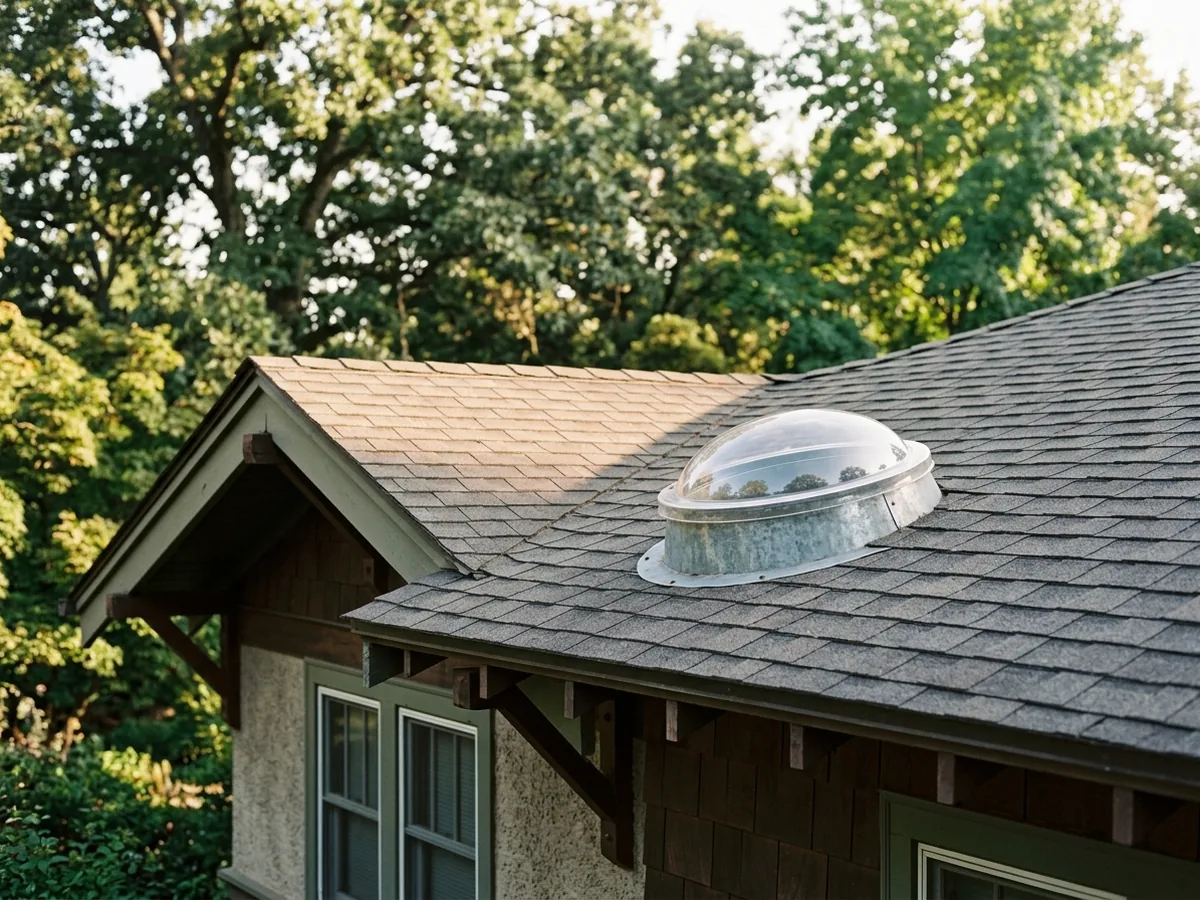
A tubular skylight is a clear dome on the roof, a reflective tube through the attic, and a diffuser in the ceiling. It usually fits between rafters without cutting framing, so a hallway, closet or windowless bathroom gets daylight through a small round hole. HomeGuide puts the installed cost at $500 to $1,000.
Our view: the tube runs through a cold attic, so have it insulated and sealed where it passes the attic floor, or it may collect condensation in winter. Michigan's code holds tubular daylighting devices to the same lab testing and labelling as unit skylights.
Skylight Leak Repair and Replacement
HomeGuide lists the usual causes of skylight leaks as poor installation, neglected maintenance, aging low-quality materials and poor roof drainage. In practice, the first job is telling a flashing leak from condensation. Water on the inside of the glass on a cold morning is usually moisture from the room. Stains on the drywall shaft below the frame, or water during rain, point to the flashing or a failed seal between the glass panes.
A flashing leak on an otherwise sound skylight can be fixed by lifting the shingles and re-flashing with a new kit. A fogged glass unit, a cracked dome or a rotted frame means replacement, which HomeGuide puts at $800 to $2,400. Skylights near the eaves on a low pitch sit right where ice dams form, so check the attic before blaming the skylight (see ice dam removal).
Why Ann Arbor homeowners call Ann Arbor Roofing Co.
- Written estimate, free of charge
- Shingle line, underlayment and ice barrier named in the price
- Deck repair priced per sheet before the tear-off
- One independent local roofer per request, not a call list
- No fee to the homeowner for the referral
How Much Does a Skylight Cost to Install or Replace?
HomeGuide's figures put a new skylight at $1,600 to $4,200 installed, with the unit alone $150 to $2,000 and labor $1,200 to $3,200. Replacing an existing skylight runs $800 to $2,400. Tubular skylights cost $500 to $1,000.
A brand-new opening costs the most, because someone has to header off the rafters, build a light shaft through the attic and finish the drywall below. Electric venting units add wiring; solar ones cost more up front and skip it. And a low-slope roof needs a curb and membrane flashing, while slate takes extra care around the cut.
Skylight requests go from us to one independent local roofing contractor, who quotes in writing for free. Ann Arbor Roofing Co. doesn't install skylights itself.
What Should a Skylight Quote Include?
The make, model and size of the unit, the flashing kit it comes with, whether the unit is fixed or venting, and who builds and finishes the light shaft. A quote that just says "install skylight" leaves out the parts that leak.
Check a few things:
The label
Michigan's code requires unit skylights and tubular devices to be tested by an independent lab and labelled to AAMA/WDMA/CSA 101/I.S.2/A440.Energy rating
For new work in this county, the code caps a skylight's U-factor at 0.55; lower is better.Underlayment and flashing
Ask for the maker's kit and an ice and water shield collar, not roof cement.Interior finish
Drywall, paint and trim inside are often excluded unless written in.
See chimney flashing repair for how wall and chimney flashing work, and roof replacement if the roof around the skylight is near the end of its life.