

Types of Gutter Guards, and What Each Keeps Out
Ann Arbor earns its Tree Town nickname. The city's i-Tree survey counted about 1,451,000 trees covering 32.8 percent of the city, and the species with the most leaf area are northern red oak, silver maple and black walnut. Our view: that mix is why one guard doesn't suit every yard. Big oak leaves, oak flower tassels in spring, maple seeds and walnut husks each get past, or stuck in, a different kind of guard.
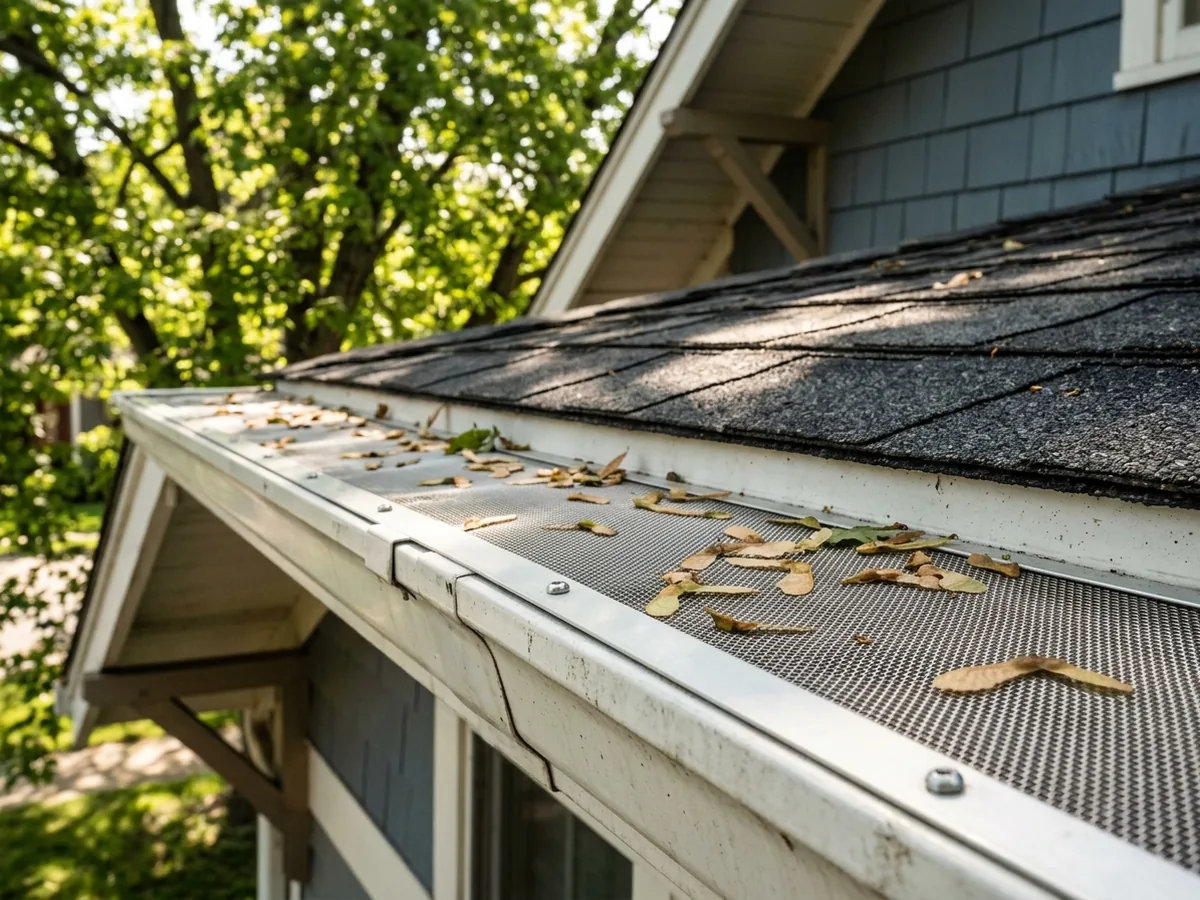
Micro-Mesh Guards
Micro-mesh is a very fine stainless steel, aluminum or plastic screen stretched over a rigid frame that covers the whole gutter. Water passes through; leaves, seeds and needles stay on top and blow or wash off. HomeGuide prices the mesh at $2 to $5 per linear foot before labor and gives it 3 to 10 or more years, depending on the material.
The trade-off is in the fineness. The same guide notes that micro-mesh blocks smaller debris than ordinary screens but is more likely to clog, and lists it as best for warmer climates. Our view: it still makes sense under oaks and maples if you accept brushing the mesh off from a ladder or with a pole now and then. Ask for stainless mesh on an aluminum frame, screwed to the front lip of the gutter, rather than a plastic panel that tucks under the first row of shingles.
Screen Guards
Screens have larger holes than micro-mesh. They keep out whole leaves and walnuts and let some seeds and grit through. Prices and life spans from HomeGuide's 2026 guide, material only:
- Plastic screen: $0.50 to $1.00 per foot, 3 to 6 years, best for mild climates.
- Steel screen: $1.50 to $5.00 per foot, 5 to 10 or more years, all climates. Powder-coated steel holds off rust longer.
- Perforated aluminum: $0.50 to $2.00 per foot, 10 to 20 or more years, all climates.
Plastic screens are the cheap fix, but by the guide's own account they don't hold up well in extreme weather. For a house that will be owned for years, perforated aluminum or coated steel is the sturdier choice.
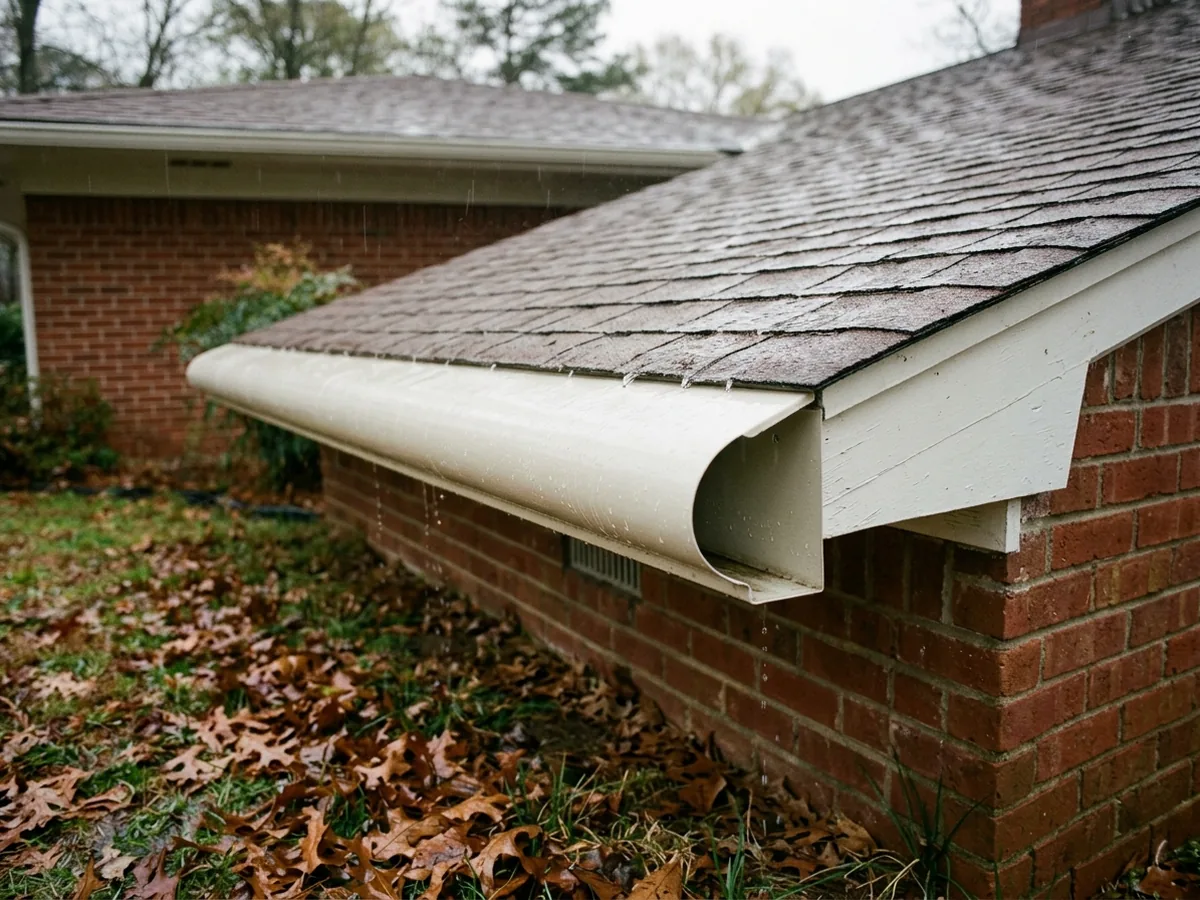
Reverse-Curve (Surface-Tension) Guards
A reverse-curve guard, also sold as a gutter helmet or hood, is a solid cover whose front edge rolls back toward the house. Rain follows that curve by surface tension and drops into a slot, while leaves slide off the front. HomeGuide puts the material at $3.50 to $10.00 per foot, 10 to 20 or more years of life, and says these usually need professional installation.
They suit roofs of mild to moderate slope, per the same guide. On a steep gable, fast water in a hard storm can shoot past the curve. That makes them a better fit on a low brick ranch or a mid-century roof than on a steep Tudor or a tall colonial.
Brush and Foam Inserts
Both sit inside the gutter rather than over it. A brush guard is a long bottle brush of plastic bristles; foam is a triangular block that fills the trough. HomeGuide prices brushes at $2 to $4 per foot with a 10 to 20 year life, and foam at $1.50 to $3.50 per foot lasting 2 to 5 years. It also warns that foam can grow mold and that seeds can sprout in it. Our view: under maples that drop seeds by the thousand, both turn into planters, so treat them as a stopgap.
Gutter Guards in Snow and Ice
No guard stops an ice dam. Ice dams form when attic heat melts snow on the roof and the water refreezes at the cold eave, which is covered on our ice dam removal page. What a guard changes is where the snow sits: on top of the cover instead of packed inside the gutter.
In our view that cuts both ways. A covered gutter stays clear of frozen leaves, but meltwater can freeze across the top of a fine mesh and run over the front edge. HomeGuide notes that a heat cable installed with the guards adds cost but helps prevent ice dams. If your eaves ice up every January, ask the contractor whether the cable runs inside the gutter under the guard, and whether the guard is rated to carry snow without crushing.

Why Ann Arbor homeowners call Ann Arbor Roofing Co.
- Written estimate, free of charge
- Shingle line, underlayment and ice barrier named in the price
- Deck repair priced per sheet before the tear-off
- One independent local roofer per request, not a call list
- No fee to the homeowner for the referral
Are Gutter Guards Worth It in Ann Arbor?
HomeGuide's 2026 guide puts professionally installed gutter guards at $15 to $45 per linear foot, or $3,000 to $9,000 for a typical 200-foot house, with a national average of $6,000. Doing it yourself costs $1 to $5 per foot in materials. A professional gutter cleaning runs $100 to $250 a visit.
Our arithmetic: two cleanings a year at HomeGuide's $175 national average is $350, so a $6,000 guard system takes about 17 years to pay back on cleaning savings alone. On that math, guards earn their keep on two-story houses under big oaks, where cleaning costs more and the ladder work is riskier, and for owners who shouldn't be on a ladder at all. On a one-story ranch with one maple, cleaning may stay cheaper.
What to Check Before Guards Go On
A guard is only as good as the gutter under it. Before anyone installs one, the contractor should confirm that:
- the gutters are pitched toward their outlets and don't hold standing water;
- seams and end caps are tight, and the hangers are solid;
- the gutter is big enough for the roof, since a cover doesn't add capacity;
- the downspouts are clear, because a guard on top won't clear a clog below.
If any of that fails, fix it first through gutter repair, or start fresh with gutter installation and put guards on the new system. The written estimate should name the guard product and material, how it fastens, the price per foot, and whether old gutters or downspouts are being cleaned or repaired as part of the job.