
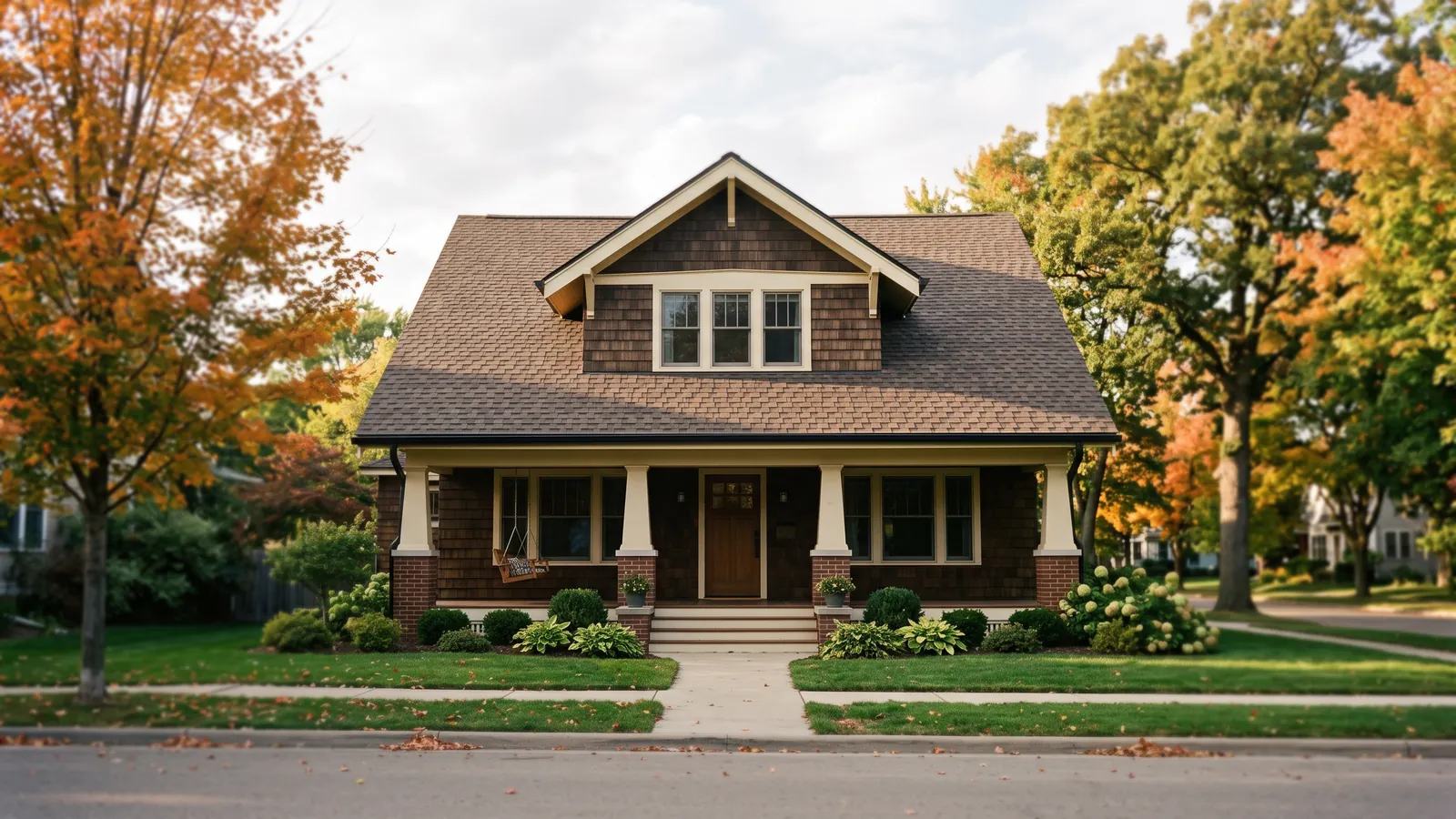
Attic Insulation Options, From Loose-Fill to Batts
Most Ann Arbor attics are open floors over ceiling joists, and the choice there is between loose-fill blown from a hose and batts laid by hand. Before either, the floor gets air sealed, and any insulation that's already there gets a hard look.
Blown-In Cellulose
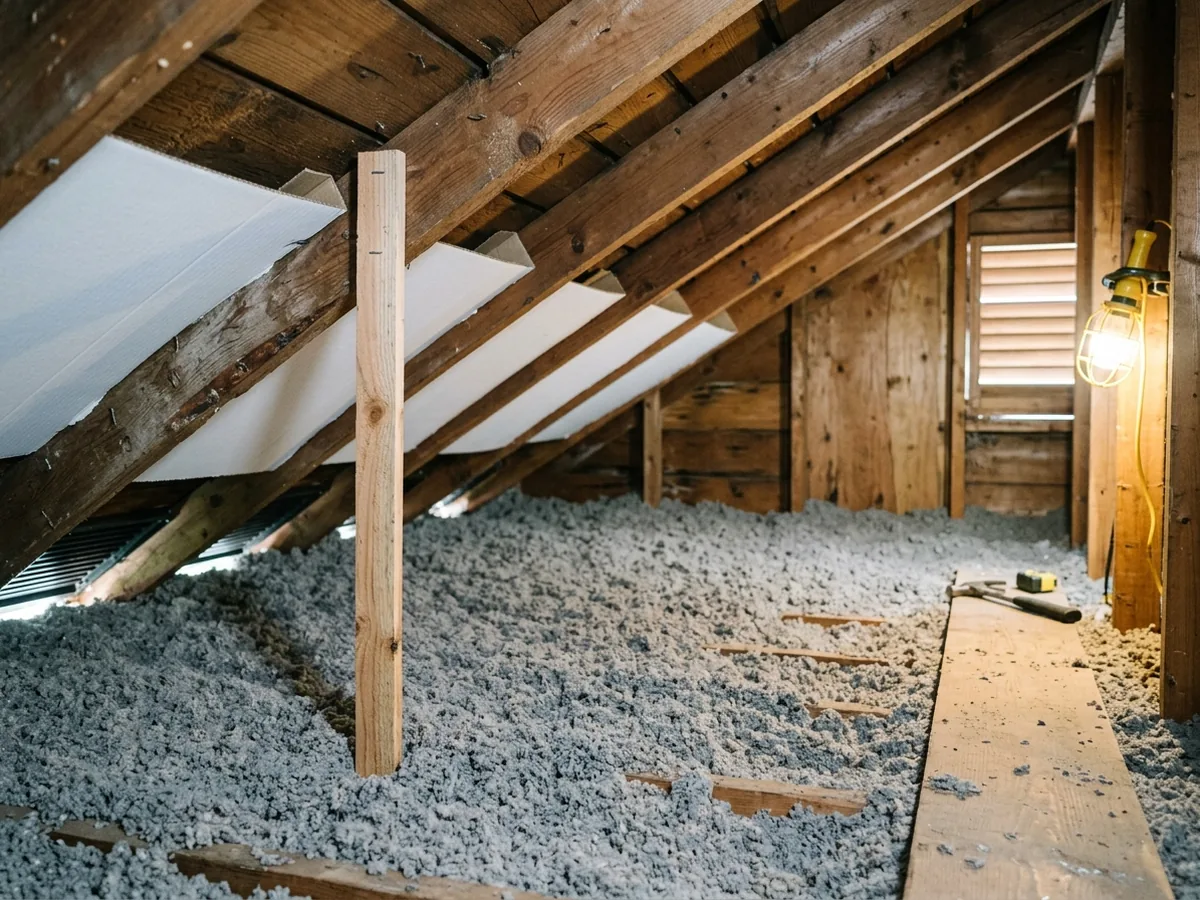
Cellulose is shredded paper, mostly recycled newspaper, treated with fire retardant and blown in through a hose run up to the attic. HomeGuide gives it an R-value of 3.1 to 3.8 per inch, the best of the loose-fill options, and notes that it settles about 10% after installation. A good installer blows it a little deeper than the target and marks the depth on rulers stapled to the joists, so you can check it later.
Cellulose packs densely around wires, junction boxes and odd framing, which suits the patched-up attics of older houses. It's heavier than fiberglass, so on an old ceiling with sagging plaster it's worth checking the ceiling first.
Blown-In Fiberglass
Loose-fill fiberglass is the same glass fiber as batts, chopped and blown. HomeGuide gives it R-2.2 to 2.9 per inch, so it needs more depth than cellulose for the same R-value, but it's lighter, doesn't burn, and settles little or not at all. Cost per square foot installed is about the same: HomeGuide puts both at $1.00 to $2.80.
Which to choose is mostly a matter of the attic. Our view: cellulose for an attic with lots of gaps and obstructions that you can't air seal perfectly, fiberglass where the ceiling is weak or where the insulation may get wet now and then and should dry out without matting.
Fiberglass Batts
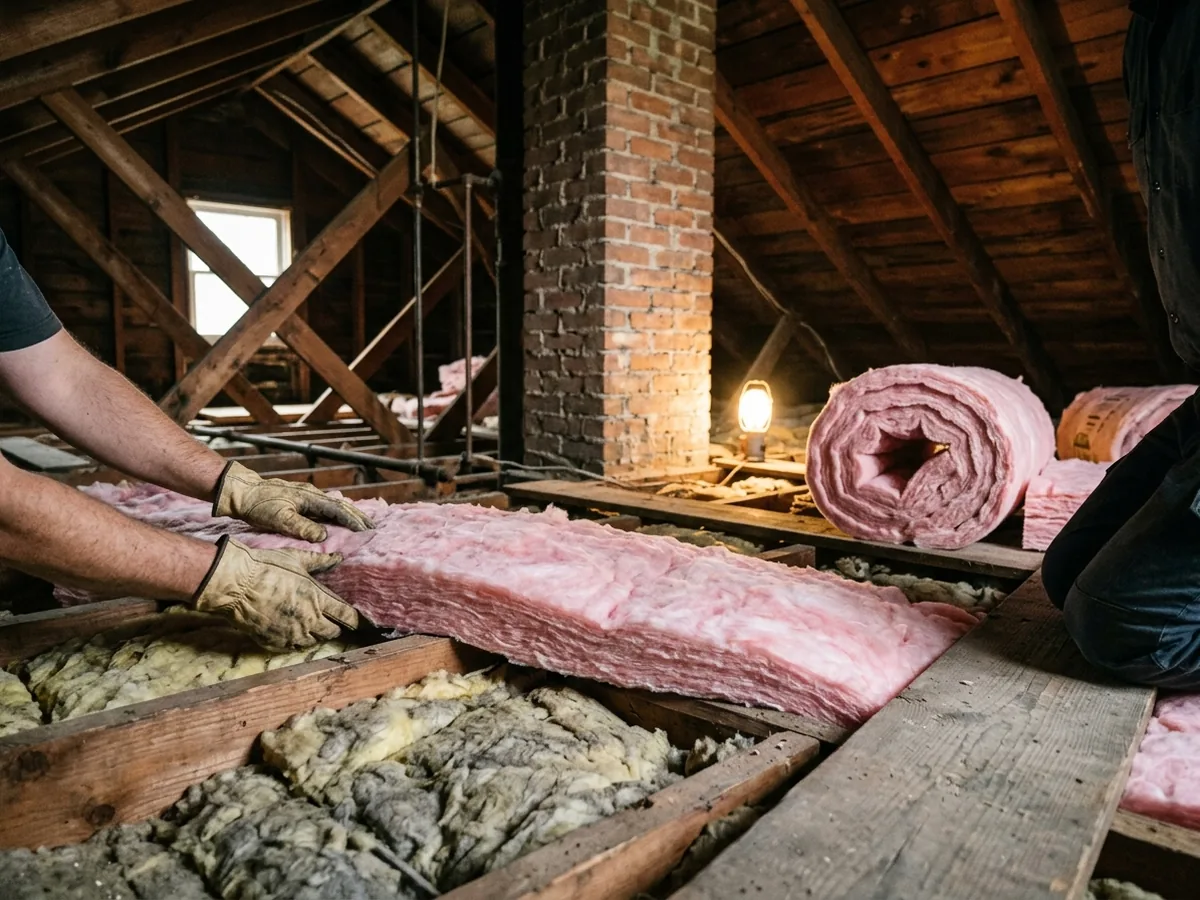
Batts are pre-cut blankets sized to fit between joists. They work where you can get at the whole floor and the joist spacing is regular, and they're the usual choice for knee-wall attics and floored storage areas where blowing loose-fill isn't practical. The weak point is fit. A batt that's squashed around a pipe, trimmed short or lifted off the ceiling leaves gaps, and gaps let heat bypass the insulation.
When batts go on top of existing insulation, the usual practice is a second layer running crosswise to the joists and is unfaced, with no paper or foil, so it doesn't trap moisture between layers. Over an older attic, laying batts on top of loose-fill is common. Laying loose-fill on top of batts works just as well and fills the gaps.
Air Sealing the Attic Floor
Insulation slows heat moving through it. It doesn't stop air. Warm, moist house air gets into the attic through gaps around the hatch, recessed lights, bath fans, plumbing stacks, wiring holes, the chimney chase and the top plates of interior walls. The result in an Ann Arbor winter is heat that melts roof snow and frost on the underside of the deck.
So the sealing comes first: foam or caulk around wires and pipes, sheet metal and fire-rated sealant around the chimney, a weatherstripped and insulated hatch cover, and covers over older recessed lights. ENERGY STAR's modelling has air sealing plus attic insulation saving about 16% on heating and cooling in climate zone 5, where Washtenaw County sits. At the eaves, baffles keep the new insulation from blocking the soffit vents (more on that on the roof ventilation page).
Removing Old or Damaged Insulation
Not everything in an old attic should stay. Insulation that's been soaked by a roof leak, flattened under storage, or fouled by raccoons, squirrels or mice usually comes out with a commercial vacuum before anything new goes in. Removal also exposes the attic floor for proper air sealing, which is hard to do through a foot of old fill.
Vermiculite is the exception to "just vacuum it." The EPA describes it as a pebble-like, pour-in product, usually gray-brown or silver-gold. The EPA says a mine near Libby, Montana, supplied over 70% of all vermiculite sold in the U.S. from 1919 to 1990, and it was contaminated with asbestos. The EPA's advice is to assume vermiculite contains asbestos and leave it alone. If it has to come out, it's a job for a trained asbestos abatement contractor, not a roofer or an insulation crew. Ask before anyone goes into the attic.
Why Ann Arbor homeowners call Ann Arbor Roofing Co.
- Written estimate, free of charge
- Shingle line, underlayment and ice barrier named in the price
- Deck repair priced per sheet before the tear-off
- One independent local roofer per request, not a call list
- No fee to the homeowner for the referral
How Much Attic Insulation Does a Michigan Home Need?
The 2015 Michigan Residential Code puts Washtenaw County in climate zone 5A and sets R-38 as the minimum for ceilings in new work. For existing homes, ENERGY STAR recommends more: R-60 if the attic is bare, or adding R-49 if it already has 3 to 4 inches. Michigan's code R-38 is a floor, not a target.
A few points on reading the numbers:
R-value is per inch times depth
At HomeGuide's cellulose figures, R-38 is roughly 10 to 12 inches settled; fiberglass needs more depth for the same R.The eaves are the weak spot
The code lets R-30 count as R-38 only where full-height R-30 extends over the wall top plate at the eaves. In older houses with shallow rafters, that edge is where heat escapes and ice dams start (see ice dam removal).Depth gauges help
Ask for rulers stapled to the joists and a certificate stating the R-value and the number of bags used.
What Does Blown-In Attic Insulation Cost?
HomeGuide's 2025 figures put blown-in attic insulation at $900 to $3,600 for a typical attic floor, or $1.00 to $2.80 per square foot installed. The price depends on attic size, the R-value you're aiming for, and whether old insulation comes out first.
Air sealing, removal of damaged insulation, baffles, and a new insulated hatch are often priced as separate lines. They're worth paying for. Michigan licenses insulation work, like roofing, as a maintenance and alteration trade, so check the licence the same way (the storm damage page explains how).
Ann Arbor Roofing Co. sends your request to one independent local roofing contractor, who looks at the attic with the roof in mind and gives you a free written estimate. We aren't the installer.
See roof ventilation for the intake and exhaust side, and roof inspection for an attic check before you decide.