Coating Types and the Roofs They Suit
Michigan's code treats a coating used as a roof as "liquid-applied roofing": it needs a design slope of at least 1/4 inch per foot and has to meet one of seven ASTM standards. Two of them cover most products on houses and small buildings: ASTM D6694 for silicone and ASTM D6083 for acrylic. The installed prices below are HomeGuide's 2026 national ranges.
Silicone Coatings
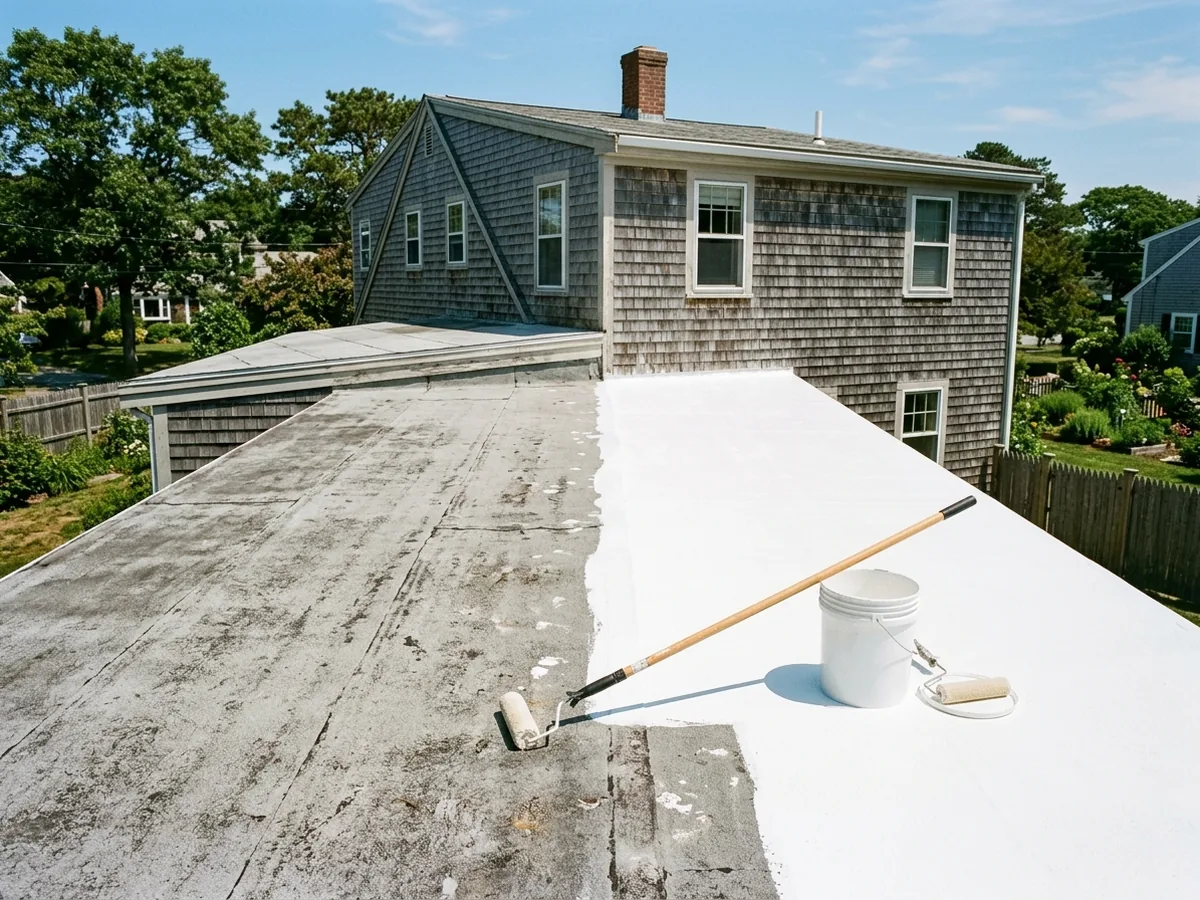
Silicone is the coating for low spots. HomeGuide says it "resists leaks from ponding water on flat roofs" better than acrylic, which is why it goes on the flat roofs over additions, porches and garages where a puddle sits for a day after rain.
- Cost: $1.50 to $4.50 per square foot installed.
- Life: 10 to 15 years.
- Drawbacks: it picks up dirt, so a white silicone roof greys over time, and it's slippery when wet.
Our view: silicone fits a low roof with a little ponding that you'd rather not tear off yet. If the puddles are deep or the deck sags, the drainage problem needs fixing first, and that's a flat roofing job, not a coating.
Acrylic Coatings
Acrylic (elastomeric acrylic) is the water-based coating, cheaper than silicone and easier to work with. HomeGuide rates it best for sloped roofs, where water runs off and never sits.
- Cost: $0.50 to $3.00 per square foot installed.
- Life: 7 to 20 years, depending on the product and number of coats.
- Where it fails: on low spots that hold water. Silicone and urethane both resist ponding better.
We'd put acrylic on the slopes of a metal roof or a low roof that drains within hours of a storm.
Coating EPDM and Modified Bitumen
The most common coating job on houses is over an aging flat roof: black EPDM rubber or a granulated modified bitumen cap sheet. HomeGuide notes that EPDM "doesn't require coatings" because the rubber itself is waterproof; owners coat it to reflect heat or to buy time as the rubber ages. For EPDM and bitumen, HomeGuide lists silicone-based or acrylic-elastomeric coatings as the usual choices.
What a sound coating job on a membrane includes:
- Cleaning the surface so the coating bonds, and on EPDM a primer made for rubber.
- Seam and flashing repair first: open laps, split flashing at walls and failed curbs get repaired and reinforced before the field coat.
- A wet-insulation check. Coating over wet insulation seals the water in.
Our view: insist on that moisture check before you pay for a coating. A coating is a maintenance step on a dry roof, and it won't fix a roof that has started taking on water. When the membrane itself is past saving, compare it with a new EPDM or TPO roof on our flat roofing page.
Metal Roof Coatings
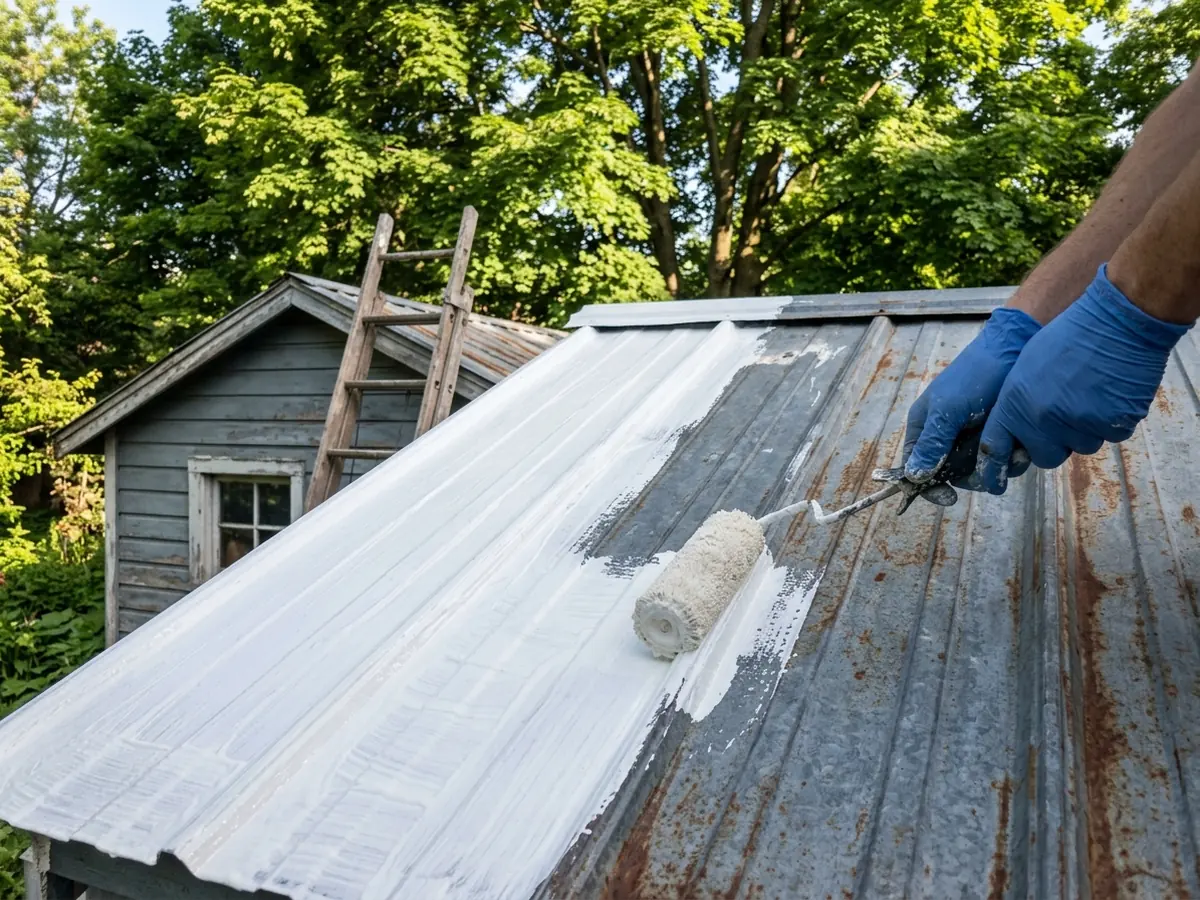
Old exposed-fastener metal roofs on garages, barns and porches chalk, fade and rust at the screws and laps. A coating can restore them. HomeGuide prices metal roof coating at $0.50 to $4.00 per square foot, with the spread driven by how much rust there is to deal with.
- Products: silicone, EPDM-type liquid rubbers, aluminum-based blends and elastomeric acrylics all work on metal. Aluminum coatings are for metal or concrete roofs only.
- Prep: loose rust removed and primed, screws with cracked washers replaced, laps sealed. The coating goes on after that work, never instead of it.
Screw and panel repairs on their own are on our metal roofing page. Paint systems on new panels are compared on our standing seam metal roof page.
Reflective (Cool Roof) Coatings
White coatings reflect a large share of the sun. HomeGuide puts white cool-roof coatings at 60% to 90% of sunlight reflected, which keeps a flat roof over a bedroom or sunroom cooler in July.
Isn't that a loss in a Michigan winter? The EPA says cool roofs "may increase energy use in buildings during winter months in cold climates", but that this heating penalty is typically offset by summer cooling savings. It adds that buildings with heavy, long-lasting snow cover have the smallest penalty, because the snow on the roof reflects sunlight anyway. Ann Arbor's winter snow totals are on our ice dam removal page.
In Ann Arbor, we think a white coating is worth it mainly on a low roof over living space that overheats in summer. On a detached garage, choose on durability, not colour.
Why Ann Arbor homeowners call Ann Arbor Roofing Co.
- Written estimate, free of charge
- Shingle line, underlayment and ice barrier named in the price
- Deck repair priced per sheet before the tear-off
- One independent local roofer per request, not a call list
- No fee to the homeowner for the referral
When Is a Roof Coating Worth It Instead of Replacement?
A coating is worth it when the roof is dry, the membrane or metal is sound, and the problems are surface wear: chalking, crazing, faded paint, minor seam wear. It isn't when insulation is wet, the deck is soft, or the roof is shingled.
On shingles specifically, HomeGuide reports that the National Roofing Contractors Association advises against coating or painting asphalt shingles. If someone offers to coat a worn shingle roof, get a second opinion; the choices there are repair or roof replacement.
Questions for whoever quotes the coating:
- 1
What product, and which ASTM standard does it meet?
- 2
How thick, in mils, and in how many coats?
In our view, a quote without a thickness can't be compared with one that has it. - 3
What happens before the coating
cleaning, priming, seam repair, rust treatment, moisture testing? - 4
Is there a manufacturer warranty,
and what does it require of the installer?
What Does a Roof Coating Cost?
HomeGuide's 2026 national averages put most roof coating jobs at $1 to $4 per square foot, with an average job of $500 to $2,000. By type: acrylic $0.50 to $3.00, silicone $1.50 to $4.50, metal roof coatings $0.50 to $4.00. Prep is where quotes differ most. A roof needing seam work, rust treatment or wet-area replacement before coating costs more than one that only needs a wash and primer.
Coating is warm-weather work in Ann Arbor. The product's data sheet sets the minimum temperature and the dry time before rain, so most coating gets scheduled for late spring through early fall.