Cedar Roof Types, Repairs and Upkeep
Cedar is graded and labelled under the Cedar Shake and Shingle Bureau's rules, which Michigan's code adopts for wood shakes. Every bundle has to carry a grading label, so the first thing to check on a quote is which product it names.
Hand-Split Shakes vs Sawn Cedar Shingles
Three products get called "cedar shake", and they're built differently:
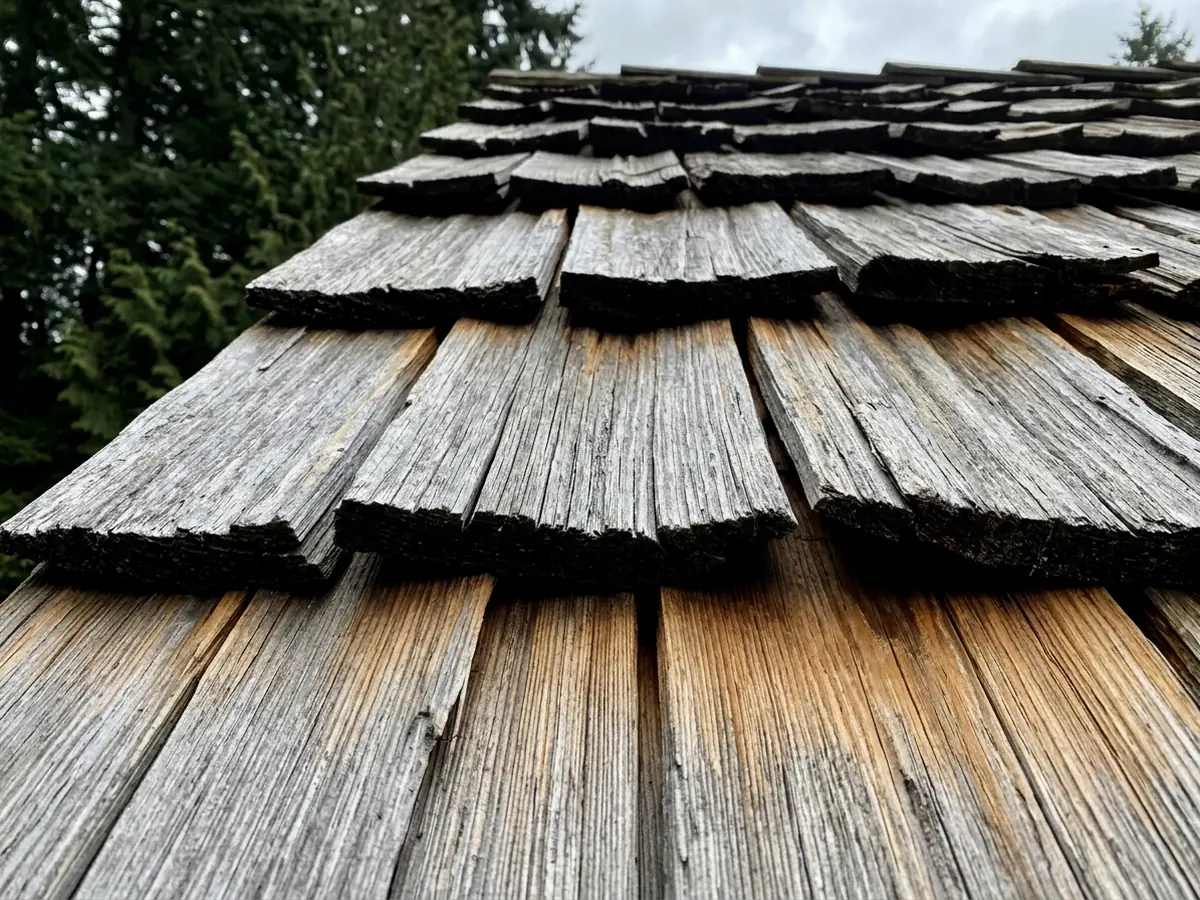
- Hand-split and resawn shakes are split for a rough, pronounced grain on the face and sawn on the back. Thickest and most textured.
- Tapersawn shakes are sawn on both faces, thick but smoother and more tapered than a hand-split shake.
- Cedar shingles are thinner and sawn on both sides for a tailored, even look.
The differences carry into how they're installed. Michigan's code wants shakes spaced 3/8 to 5/8 inch apart in each course and shingles 1/4 to 3/8 inch, so the wood can swell when wet. Shakes go only on slopes of 3:12 or steeper, and a 24-inch hand-split shake may show no more than 7 1/2 inches to the weather. HomeGuide puts shakes at $2 to $5 more per square foot than shingles.
Our view: on a 1920s bungalow or Tudor, sawn shingles often match what was there originally better than heavy hand-splits do.
Cedar Shake Repair
Individual shakes split, cup or blow loose, and they can be replaced one at a time without disturbing the rest of the roof. The roofer cuts the old nails under the course above, slides in a new shake of the same length and grade, keeps the side gaps open, and fastens it.
The code is specific about those fasteners. Each shake gets two, and they must be stainless steel (Type 304 or 316) or hot-dipped galvanized. Fire-retardant or preservative-treated shakes need Type 316 stainless. Our view: check the nails on any small repair, because a bright steel nail is the easiest shortcut to take.
A repair call is also the time to look at what's causing the damage: overhanging branches, a downspout from an upper roof draining onto the shakes, or a valley packed with leaves.
Replacement: Interlayment and Spaced Sheathing
A new shake roof isn't built like a shingle roof. Two details set it apart:
- Interlayment. Each course of shakes is interlaid with an 18-inch-wide strip of No. 30 felt, positioned so none of it shows to the weather. The Bureau's own guidance is the reverse for sawn shingles: never interlay them with felt.
- Spaced sheathing. Shakes can go on solid decking or on 1x4 boards spaced to match the weather exposure, which lets air reach the underside of the wood so it dries.
There's an exception that applies here. In places where January's average temperature is 25 °F or lower, the code requires solid sheathing wherever the roof needs an ice barrier, and Ann Arbor qualifies. So the lower few feet of an Ann Arbor shake roof go on solid decking with the ice barrier, and spaced boards can start above it. (The ice barrier rule itself is on our ice dam removal page.)
How a re-roof is permitted and torn off is covered on the roof replacement page.
Moss, Cleaning and Treatment
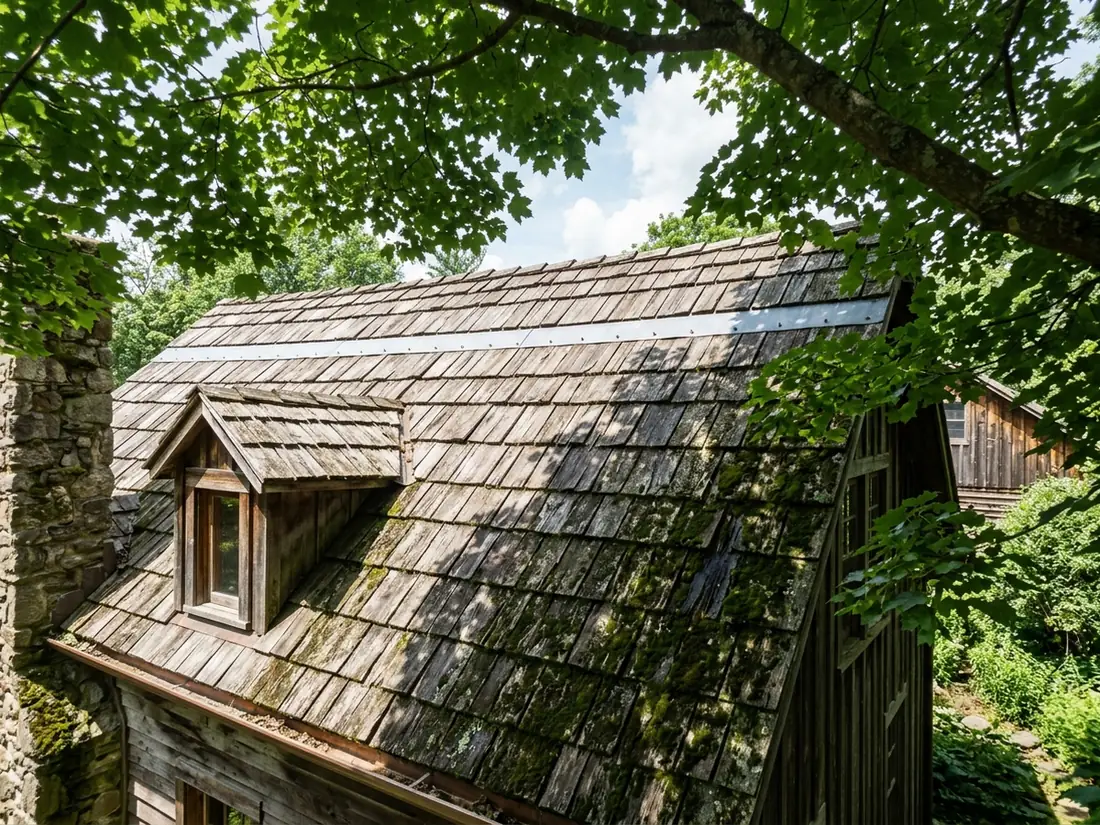
Ann Arbor's mature oaks and maples shade a lot of roofs, and shade plus leaf litter is what grows moss on cedar. The Bureau's maintenance advice:
- Inspect at least twice a year and after big storms, with a professional who knows how to walk a wood roof.
- Prune overhanging branches and keep debris out of the keyways and valleys, because cedar needs to dry.
- Zinc or copper strips nailed at the ridge release a mild solution with each rain that discourages moss below them.
- A bleach and water solution clears surface growth. The Bureau warns that pressure washing in inexperienced hands "can cause significant damage to a roof".
HomeGuide suggests reapplying a wood preservative every 3 to 5 years, at $500 to $1,500 a treatment. Treated product lines exist too: the Bureau certifies Certi-Last for preservative treatment and Certi-Guard for fire-retardant treatment.
Synthetic Cedar Shake
Synthetic shakes are molded from composites or recycled plastics to look like split cedar. HomeGuide prices them at $12 to $20 per square foot installed against $25 to $30 for real cedar, and gives them a 40 to 60 year life with less maintenance. HomeGuide also notes better fire resistance than untreated wood.
The catch is appearance up close and, in a historic district, approval: synthetic shake replacing wood is a change of material that goes to the Historic District Commission (see slate roof repair for how the review works).
Why Ann Arbor homeowners call Ann Arbor Roofing Co.
- Written estimate, free of charge
- Shingle line, underlayment and ice barrier named in the price
- Deck repair priced per sheet before the tear-off
- One independent local roofer per request, not a call list
- No fee to the homeowner for the referral
How Long Does a Cedar Shake Roof Last in Michigan?
HomeGuide gives real cedar shakes 30 to 50 years with proper maintenance, and the NAHB study put wood shakes at about 30. The difference between those numbers is mostly upkeep. A shake roof that's kept clean, dries out between rains and has its broken pieces replaced reaches the high end. One left under a canopy with moss in the courses doesn't.
Signs a cedar roof is near the end:
- shakes worn thin, with nail heads showing or wood eroded around them;
- widespread cupping, splitting and missing pieces after each winter;
- soft, dark shakes that stay wet long after rain;
- moss returning across whole slopes, not only in the shade.
Is a Cedar Roof Worth It in Ann Arbor?
On price alone, no: HomeGuide's $25 to $30 per square foot installed for real cedar is several times the $4 to $6 it gives for architectural shingles. People choose cedar for how it looks on a particular house, and because a well-kept wood roof lasts longer than a shingle one.
Our view: cedar makes sense if you'll keep up the twice-yearly checks and periodic treatment, and the house was built for it. If you won't, synthetic shake or a designer asphalt shingle gets most of the look for less work. A bad cedar roof isn't always a full replacement, either; a roof inspection sorts repairable damage from worn-out wood.