
Ice Dam Removal and Prevention, Method by Method
Some of these methods get water off the roof today. Others mean you won't be calling again next January. Most houses need one of each.
Steam Ice Dam Removal
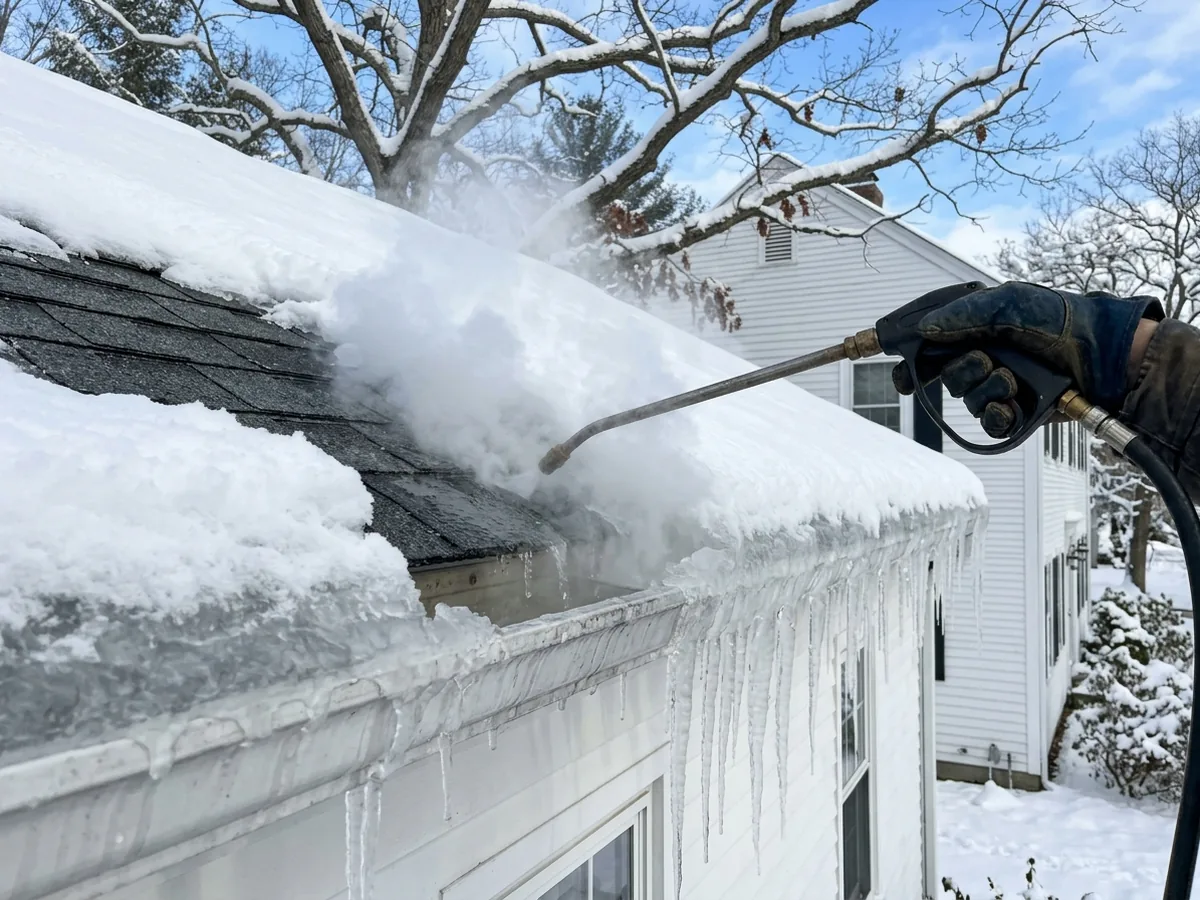
Low-pressure steam is how professionals take ice off a roof. HomeGuide describes steamers running at about 290 °F, with the steam pushed through a special nozzle so it melts the ice without damaging the roof. The operator cuts channels through the dam down to the shingle surface so trapped water can drain, then works the rest of the ice off in blocks.
Chipping with hatchets, picks or shovels is cheaper and does damage. The University of Minnesota's extension service was telling homeowners decades ago never to chop through ice down to the shingles or use a blow torch, and that advice hasn't aged. HomeGuide notes that chipping risks damaging the roof, and frozen shingles snap. Our view: if someone shows up with a hatchet, send them away.
Roof Snow Removal
An ice dam needs snow above it to keep feeding it. Taking snow off the lower few feet of the roof, the part above the eave where the dam forms, cuts off that supply. Minnesota's extension service called the roof rake (a long-handled pull-down scraper) the main tool, used from the ground with care. HomeGuide puts professional roof raking at $200 to $500 a visit.
Raking from a ladder on ice is a good way to fall. A contractor works from the ground with extension poles, or on the roof with fall protection, and leaves a thin layer of snow so the rake never scrapes the shingles. The weight of the snow is a separate question. The city's design snow load and how metal roofs shed snow are covered on the standing seam metal roof page.
Heat Cables
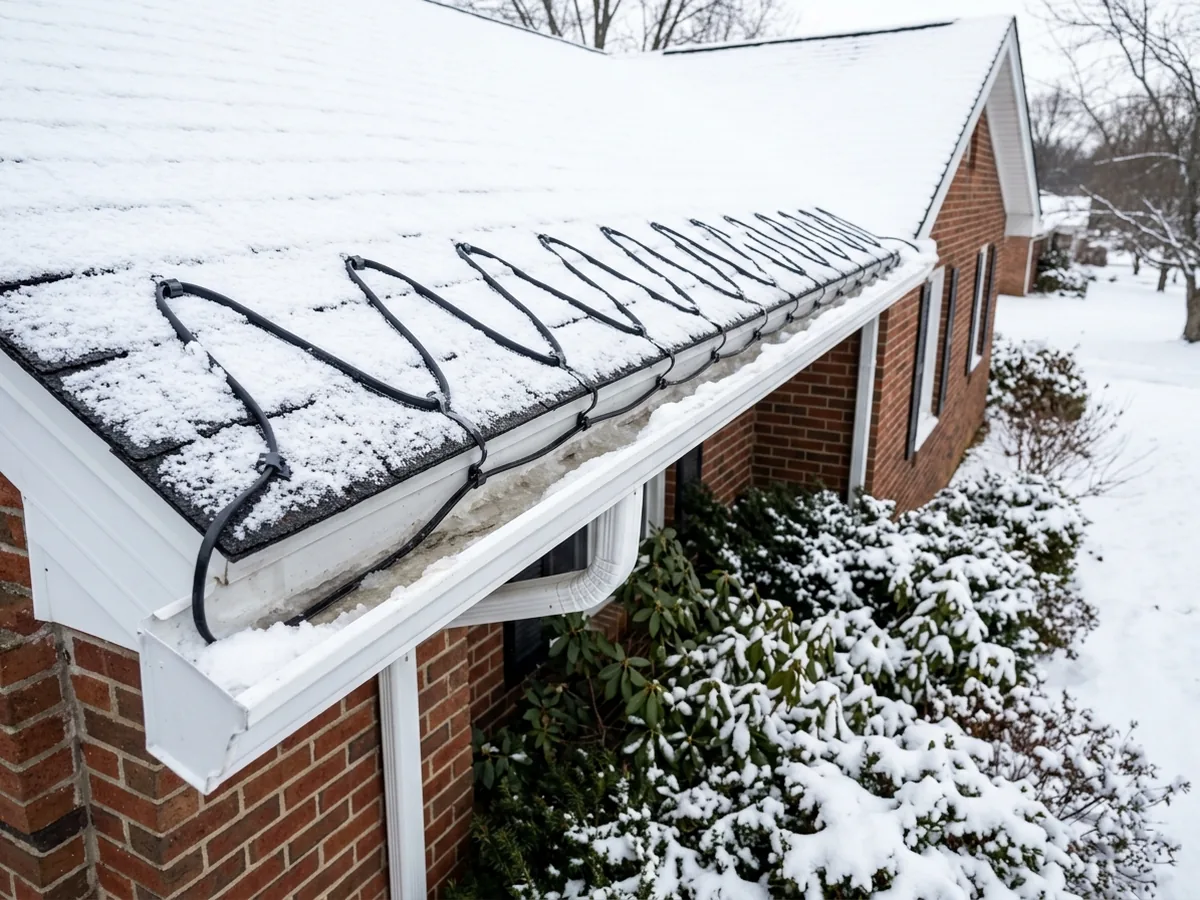
Heat cables are zigzag electric cables clipped along the eave, often run down through the gutter and downspout. They keep a drainage path open. They don't stop the attic heat that makes the dam in the first place.
The Minnesota fact sheet was blunt about their limits: the melting reaches only a few inches from the cable, and the sawtooth melting pattern can start a second ice dam further up the roof, while the cables draw a lot of power. Cables make sense on a trouble spot that can't be fixed from inside, such as a valley over a cathedral ceiling, a low-slope porch tie-in or a north eave that never sees sun. They're a poor whole-roof answer. If you use them, ask for clips that hold the cable without nailing through the shingles.
Air Sealing and Insulation
This is the cure. Michigan State University Extension calls the underlying problem "undesirable attic heat," from too little insulation or too little ventilation. The State of Michigan's MI Ready site points at warm air from the living space getting into the attic, and adds that big icicles along the eaves can be the first sign. Heat melts the snow on the upper roof, and the water refreezes at the cold eave overhang.
The order matters: seal the air leaks in the attic floor first, because insulation laid over them doesn't stop moving air, then insulate. Where to seal, how deep to go and Michigan's R-values are on the attic insulation page. Ventilation keeps the underside of the deck near outdoor temperature. The code's vent ratio is on the roof ventilation page. The Minnesota sheet made the same point in 1979: insulation alone won't prevent ice dams without ventilation.
Ice and Water Shield at the Eaves
No roof here can count on never having an ice dam, so Michigan's code builds in a backstop. The 2015 Michigan Residential Code requires an ice barrier wherever the January average temperature is 25 °F or below, or where ice dams have a local history of damage. Ann Arbor's January mean is 24.0 °F, so the answer here is "Yes."
The barrier is either two layers of underlayment cemented together or a self-adhering polymer-modified bitumen sheet, the material roofers call ice and water shield. The membrane has to reach at least 24 inches past the exterior wall line, measured in from the eave, so it covers the strip of roof that sits over heated rooms. On roofs 8:12 and steeper, it also has to reach at least 36 inches up the slope from the eave. It seals around nails and keeps backed-up water out of the house even when it gets under the shingles. It's installed at re-roofing, which is one more reason to fix the attic in the same project (see roof replacement).
Why Ann Arbor homeowners call Ann Arbor Roofing Co.
- Written estimate, free of charge
- Shingle line, underlayment and ice barrier named in the price
- Deck repair priced per sheet before the tear-off
- One independent local roofer per request, not a call list
- No fee to the homeowner for the referral
Why Does Ann Arbor Get So Many Ice Dams?
Lots of snow and long freezing stretches, which turn any heat leaking into the attic into ice at the eaves. NOAA's 1991-2020 normals for the University of Michigan station give the city 61.4 inches of snow a year, 18.3 of them in January, and 130 nights at or below freezing.
The numbers that matter for ice dams:
Snow cover
About 59 days a year with at least an inch of snow on the ground, so a snowpack sits on the roof for weeks.Days below freezing
Almost 45 days a year when the high never gets above 32 °F. The eave overhang stays frozen while attic heat melts the upper roof.January
A mean of 24.0 °F, a normal low of 16.2 °F and a high of 31.9 °F. Sunny afternoons just under freezing are prime ice-dam weather.
Our view: older houses with knee-wall attics, cathedral ceilings and little room for insulation at the eaves are the likeliest to get dams, because that's where warm ceiling meets cold overhang.
What Does Ice Dam Removal Cost?
HomeGuide puts steam removal at $800 to $2,400, depending on the length of the dam, the height of the roof and how much snow has to come off first. Chipping costs $800 to $1,800 and risks the shingles. Roof snow raking runs $200 to $500 a visit.
A long, thick dam on a two-story eave sits at the top of those ranges. Leak damage is billed apart: wet insulation, stained drywall and soaked decking are repairs, not removal. Prevention (air sealing, insulation, ventilation) is the bigger project, and the only one that ends the cycle.
Call us and the request goes to one independent local roofing contractor. Its estimate, free and in writing, can cover removal plus the attic or roof work that stops the dams coming back. The contractor does that work, not us.
See emergency roof repair if water is coming in right now, and gutter guards for how guards behave in snow and ice.