
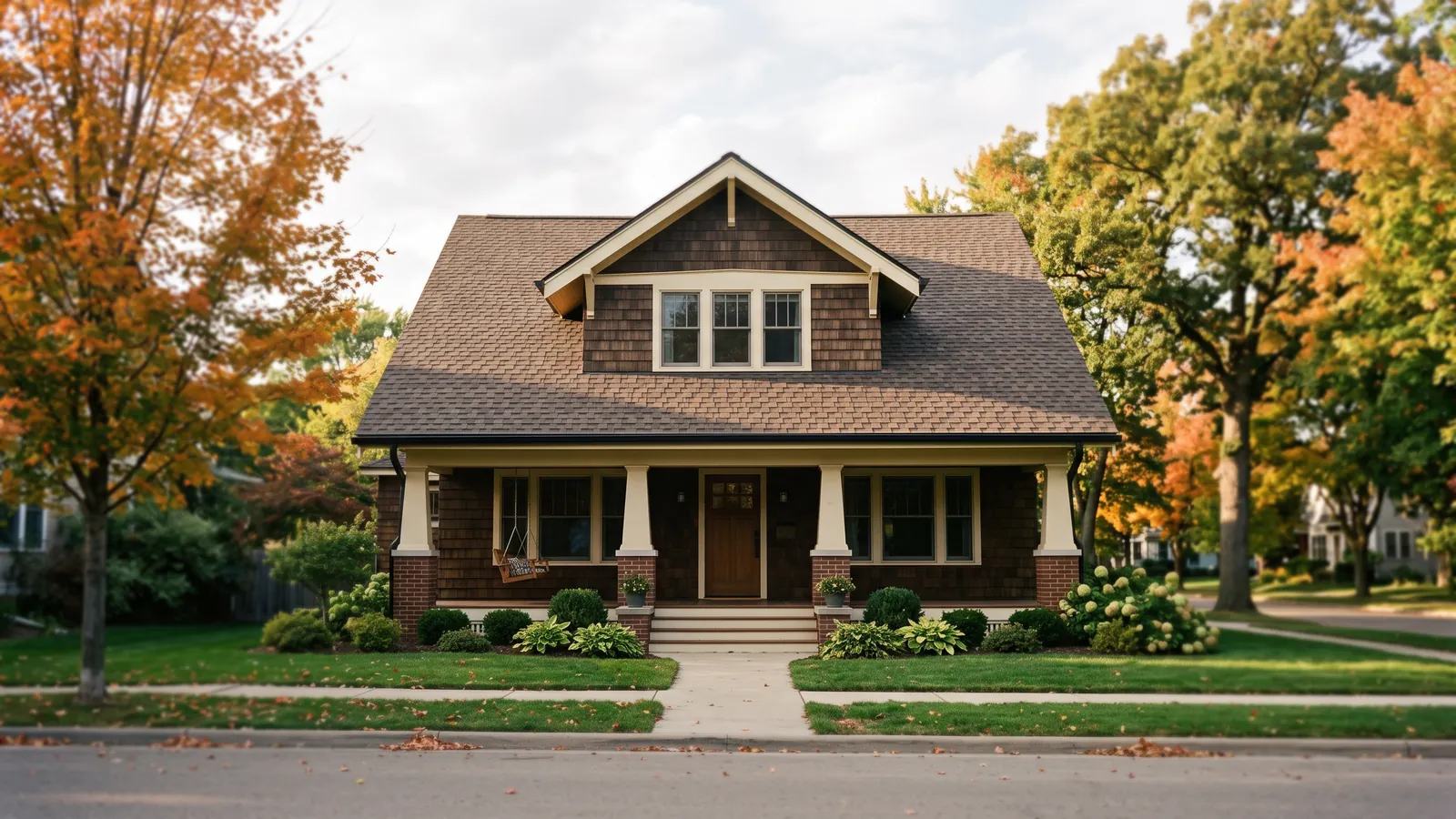
Re-Roofing Around Solar: What the Job Involves
A solar array turns a roof into something you can't easily get at for decades. Each section below is one decision that changes what the roof replacement costs, now or in 15 years.
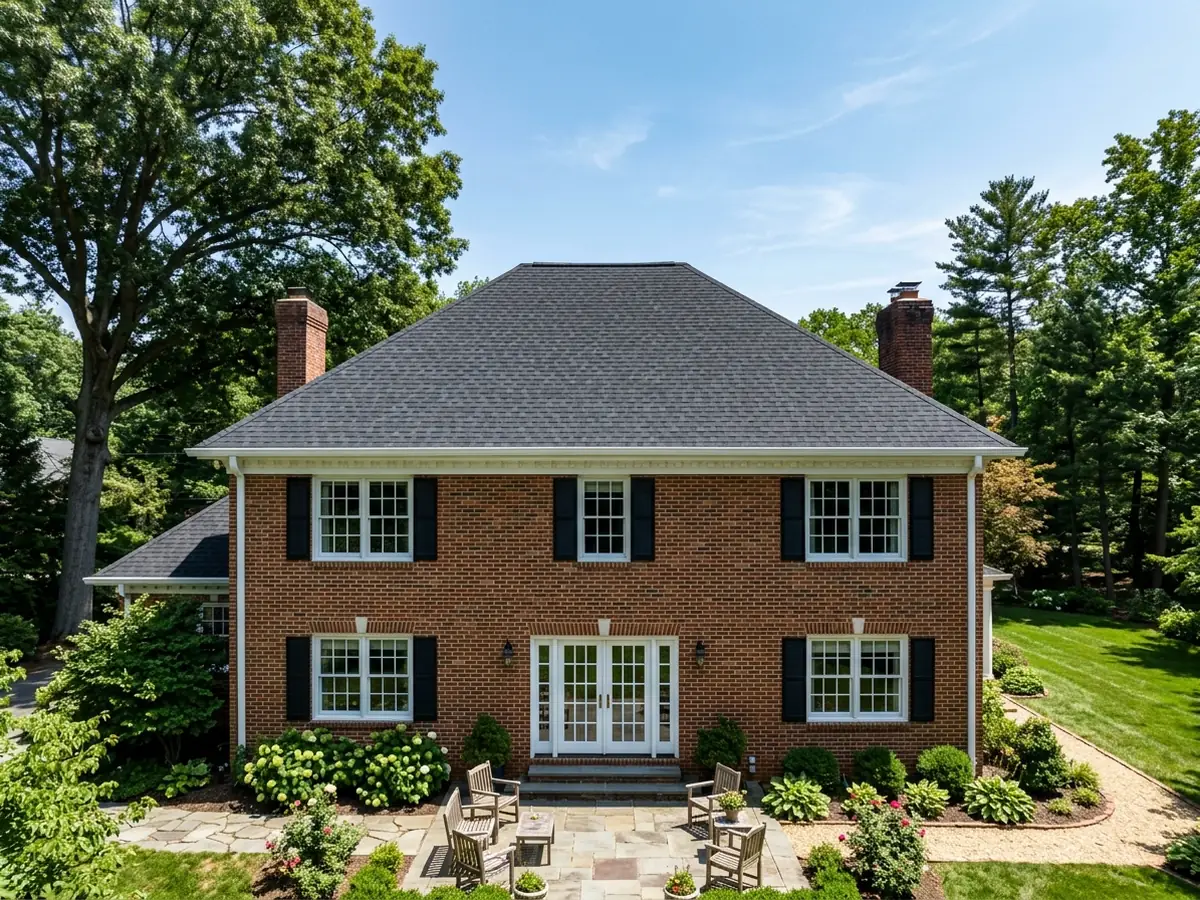
Roof Age vs Panel Lifespan
The U.S. Department of Energy says residential solar panels usually last 20 to 25 years, and it tells buyers of solar homes to compare the system's age with the roof's and consider "whether the roof may need repair before the solar system expires." That's the whole question in one line.
HomeGuide gives architectural shingles 20 to 30 years. Put a new array on a 12-year-old shingle roof and the roof will be due around the middle of the panels' life, which means paying to take the array off and put it back. Put it on a new roof and the two wear out at roughly the same time.
Inverters are on a different clock. DOE puts string inverters at 10 to 15 years, so expect to replace one during the panels' life; microinverters mounted under each panel last about as long as the panels.
Our view: if the roof is more than about halfway through its expected life, re-roof first. How long each material lasts is on its own page, such as asphalt shingle roofing.
Removing and Reinstalling Panels
When panels are already up and the roof under them is failing, the array has to come off. Fixr's national figures:
- $200 to $300 per panel to disconnect, remove and reinstall, including an inspection afterward.
- $2,800 to $4,800 for a typical 14 to 16 panel system, about $3,800 on average, not counting the new roof.
- 1 to 2 days to take the panels down and 2 to 3 days to put them back after the roof is done.
Fixr also notes that in most cases the company replacing the roof isn't the company that removes the panels. In practice that means three steps in order: the solar installer (or an electrician) disconnects and removes the array, the roofer replaces the roof and flashes new mount points, and the solar side reinstalls and recommissions the system. Ask whether the original installer will honour its workmanship warranty if someone else reinstalls the panels.
Flashing the Solar Mounts
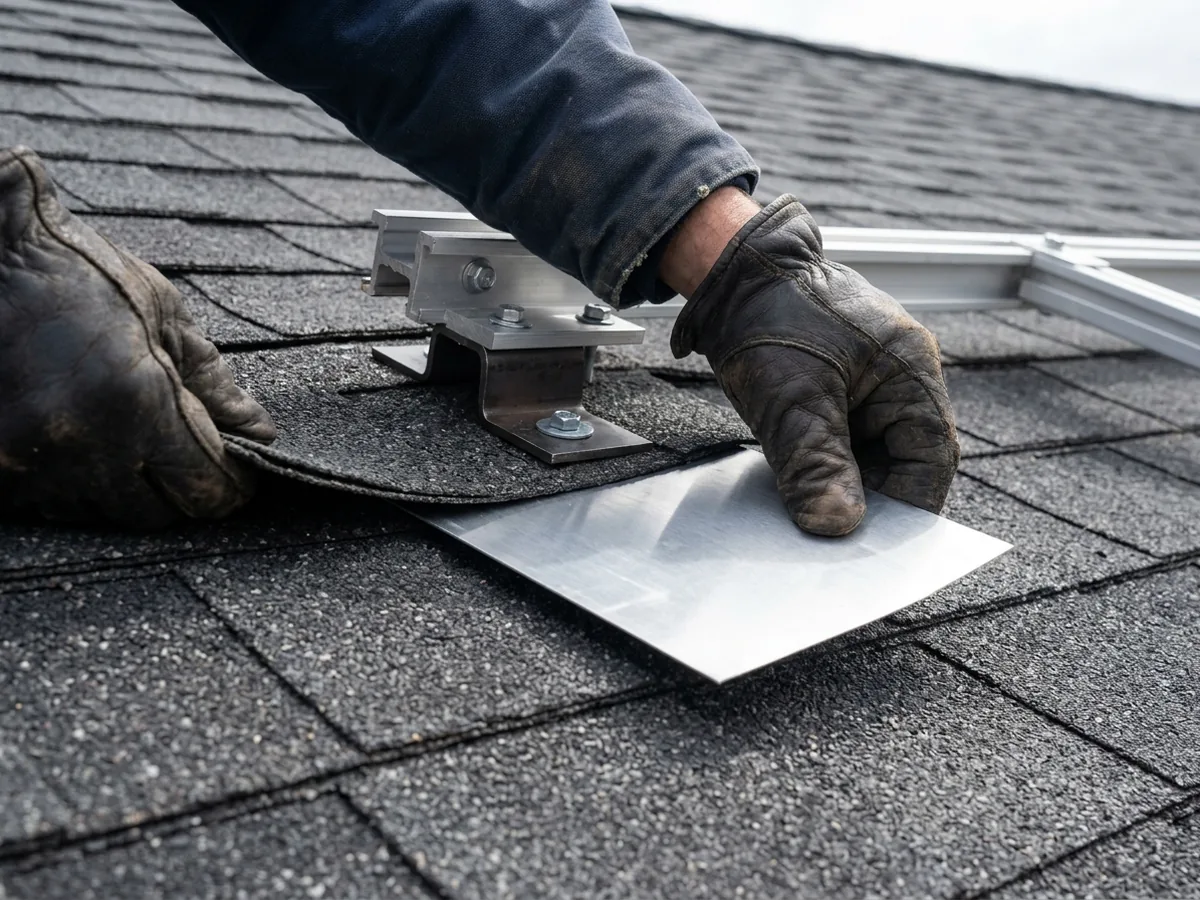
On a shingle roof, every rail is held up by mounts lagged through the deck into the rafters, and every one of those is a hole in the roof. Michigan's code says plainly: "Roof penetrations shall be flashed and sealed in accordance with this chapter," the same chapter that governs the rest of the roof. It also requires the roof itself to be built to carry the array's load.
A properly flashed mount uses a metal flashing plate slid up under the shingle course above, so water runs over it the way it runs over the shingles. A mount sealed only with a dab of caulk relies on the caulk for its whole life.
Our view: if the roof is being replaced right before solar, have the roofer and the solar installer agree on who installs the mount flashing and whose warranty covers it before either one starts.
Roofing That Works Under Panels
Two roofs suit solar best.
New architectural shingles are the common choice: cheapest per square foot, easy to flash around mounts, and timed to wear out with the panels.
Standing seam metal is the other. Solar rails clamp straight onto the raised seams with no holes through the panels. Metal Construction News notes that metal roofing outlasts the service life of a solar array, so the roof under the panels shouldn't need replacing at all. HomeGuide's 30 to 80+ year life for metal backs that up. It costs more up front; see standing seam metal roof.
Michigan's code also shapes the layout. On a house it calls for access pathways and a clear band of at least 3 feet below the ridge for fire department ventilation, and 18 inches from hips and valleys where panels sit on both sides (with exceptions the building official can approve). Detached garages are exempt from those pathway rules, which can make a garage roof the simpler place for an array. If the garage roof needs work first, see garage roof replacement.
Solar on Historic-District Roofs
Ann Arbor's historic districts have a specific rule for solar. On the Historic District Commission's Staff Approval List, item 33 lets city staff approve solar panels on roof surfaces that are not visible from the street. Panels on a street-facing slope fall outside staff approval and go before the Commission.
That makes the rear slope or a garage roof the easy route in a district. The same review rules cover the roofing under the panels: a new roof that exactly matches the existing one can be staff-approved, a change of material can't (details on our slate roof repair page).
Why Ann Arbor homeowners call Ann Arbor Roofing Co.
- Written estimate, free of charge
- Shingle line, underlayment and ice barrier named in the price
- Deck repair priced per sheet before the tear-off
- One independent local roofer per request, not a call list
- No fee to the homeowner for the referral
Should I Replace My Roof Before Installing Solar Panels?
Usually, if the roof is past the middle of its life. Panels last 20 to 25 years by DOE's figure, and removing and reinstalling a typical array costs $2,800 to $4,800 by Fixr's. Re-roofing first means that bill likely never comes. Our view: a roof under 10 years old with sound flashing can usually take the array as it is.
Before the solar contract is signed:
- 1
Get the roof inspected
by a roofer, not only the solar salesperson. A roof inspection tells you how many years are left. - 2
Check the attic
for stains or soft deck boards under the slope the array will cover. - 3
Price the re-roof and the array together
, so the roof and the mount flashing are planned as one job.
Does the Federal Solar Tax Credit Cover the Roof?
No, and for most new systems it no longer applies at all. The IRS says the 30% Residential Clean Energy Credit covered property installed from 2022 through December 31, 2025, and "is not available for any property placed in service after December 31, 2025."
Even when it applied, the roof didn't count. The IRS specifically excludes "roof trusses and traditional shingles that support solar panels"; only solar roofing tiles and solar shingles, which generate power themselves, qualified. Budget a re-roof before solar as a roofing cost.
The full re-roof itself, from permit to tear-off, is covered on our roof replacement page.