

Common Roof Repairs on Ann Arbor Houses
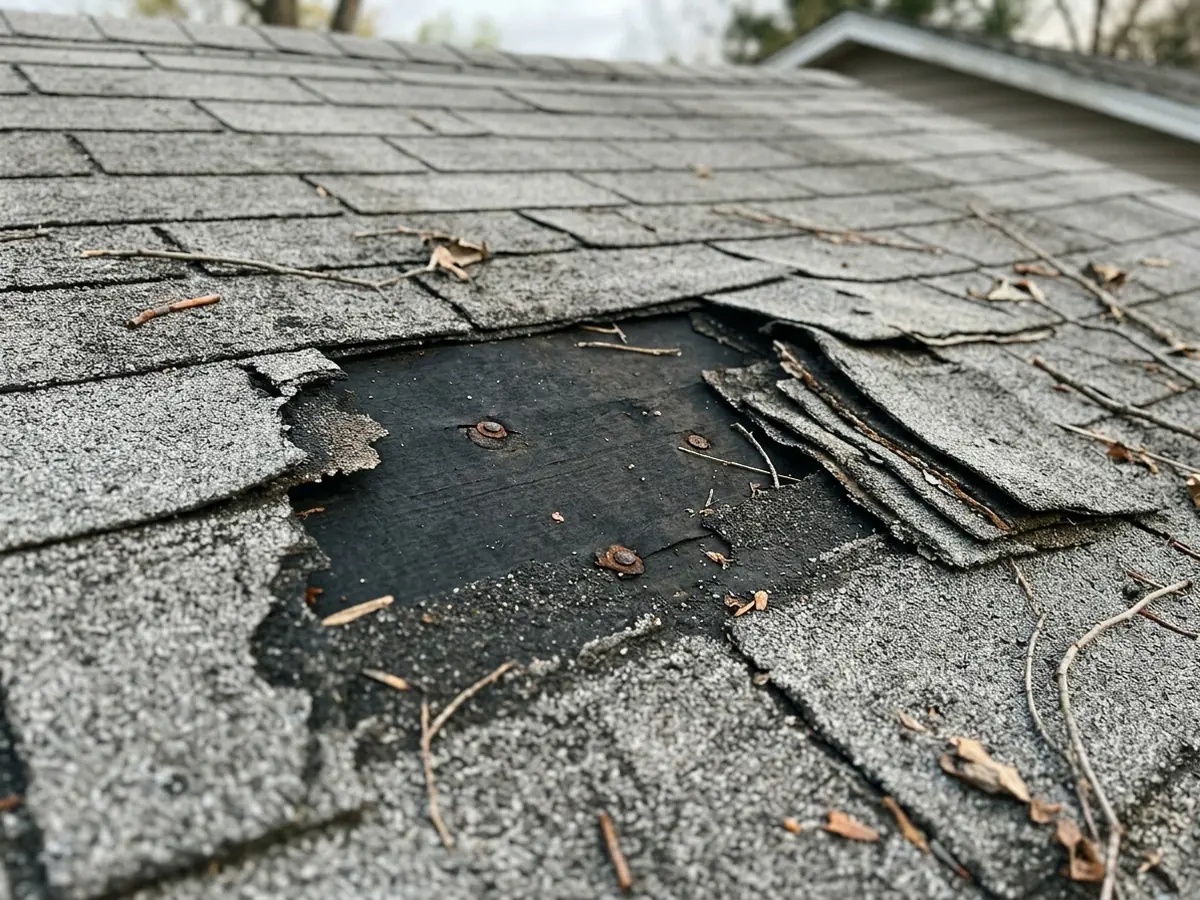
Missing and Wind-Lifted Shingles
A shingle that lifts in a gust doesn't always blow away. Often it folds back, creases along the nail line and drops back into place looking almost normal. The crease breaks the seal strip, and the next storm takes it. From the ground you'd see a missing tab; up close you'd see several creased ones around it.
The repair is to slide out the damaged shingles, slip new ones under the course above and nail them down. Each new strip shingle gets four nails or more, driven 3/4 inch into the sheathing, per Michigan's code. HomeGuide prices replacing up to about 25 shingles at $100 to $300. If storms keep stripping the same slope, the storm damage roof repair page explains how wind damage is documented for an insurance claim.
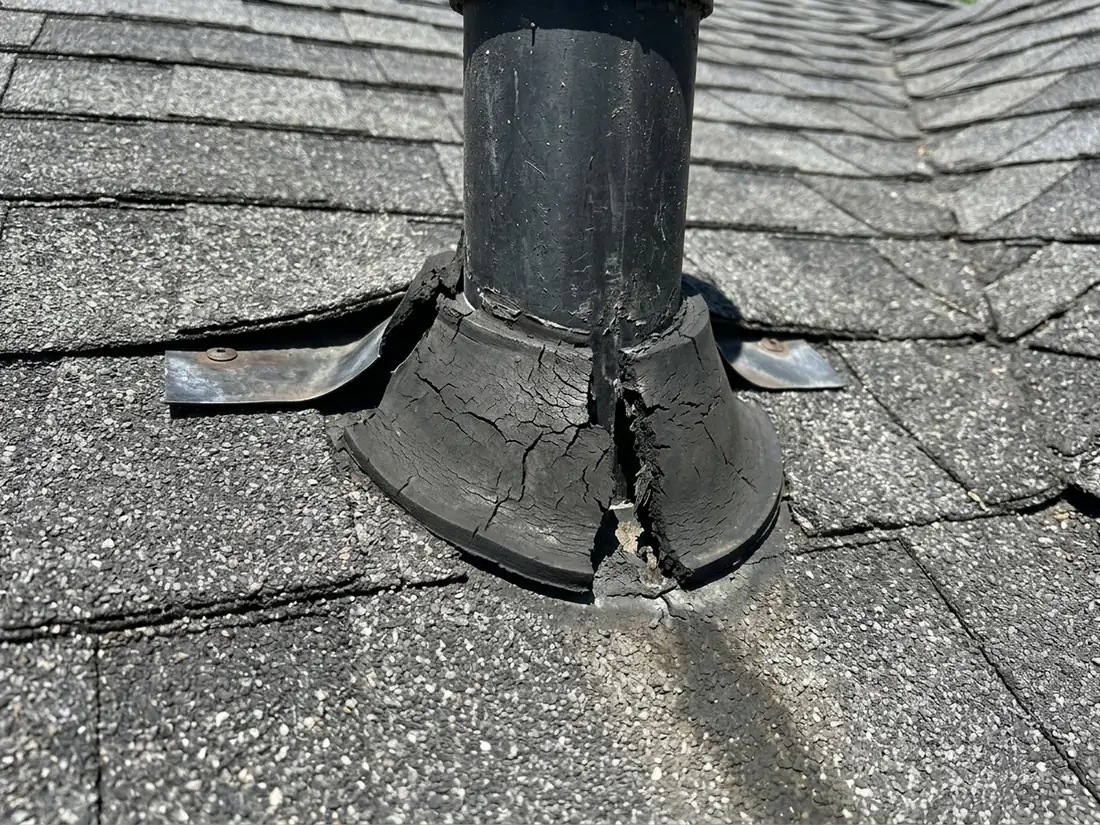
Pipe Boot and Roof Vent Leaks
Every plumbing vent that pokes through the roof is sealed by a boot: a metal or plastic flange under the shingles with a rubber collar hugging the pipe. The flange outlasts the rubber. After years of sun and freezing nights, the collar cracks and water runs down the pipe into the attic. The stain usually shows up on the ceiling right around a bathroom or kitchen vent.
Michigan's code leaves vent pipe flashing to the shingle maker's printed instructions, which in practice means a boot woven into the courses: shingles over the top of the flange, flange over the shingles below. HomeGuide puts a vent boot repair at $75 to $150 and a full vent replacement at $200 to $700. Box vents and ridge vents leak too, usually at cracked housings or missing nails. If the attic needs more airflow, not just a patched vent, see roof ventilation.
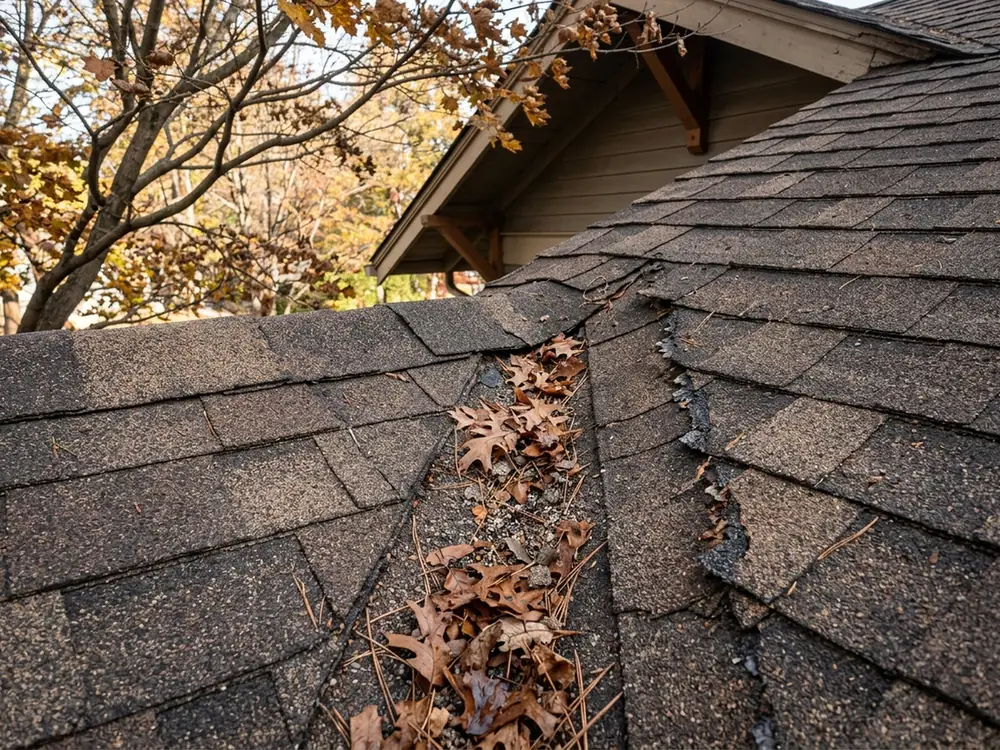
Valley Repair
A valley takes the runoff from two roof planes at once, so it wears faster than the slopes on either side. Leaves from maples and oaks pile up in valleys here every fall, hold water against the shingles and push it sideways into the laps.
The code allows two kinds. An open valley is lined with corrosion-resistant metal at least 24 inches wide, left exposed. A closed valley is shingled over, with a lining under it of smooth roll roofing at least 36 inches wide or a self-adhering membrane. A worn valley gets stripped back and relined, not tarred over. HomeGuide lists valley replacement at $200 to $850.
Nail Pops and Exposed Fasteners
A nail pop is a roofing nail backing out of the deck and lifting the shingle above it. It happens when a nail missed the rafter or deck board, was driven short, or when the wood shrinks and swells around it through the seasons. The raised head eventually punches through the shingle above, and that small hole is enough to drip.
The fix is to pull the loose nail, drive a new one beside it into solid wood, and seal the old hole under a new or lifted shingle. Exposed nail heads on ridge caps and at the last course need sealant over them. One or two pops are routine. Pops scattered over a whole slope can mean the deck itself is moving, which is a different conversation.
Tracing a Leak to Its Source
The stain on your ceiling is where the water ended up, not where it got in. Water that slips past a flashing can run along the underside of the deck or down a rafter for several feet before it drips. That's why a good roofer starts inside: attic first, flashlight on the wet wood, following the trail uphill.
If the attic doesn't give it away, the next step is a water test. One person runs a hose on a single section of roof, starting low and working up, while someone inside watches for drips. It's slow, and that's the point. Spraying the whole roof at once tells you nothing.
Leaks at chimneys and sidewalls are flashing work, covered on chimney flashing repair. A winter leak along the eaves is usually an ice dam, not a hole; see ice dam removal. Water coming through the ceiling right now is a job for emergency roof repair.
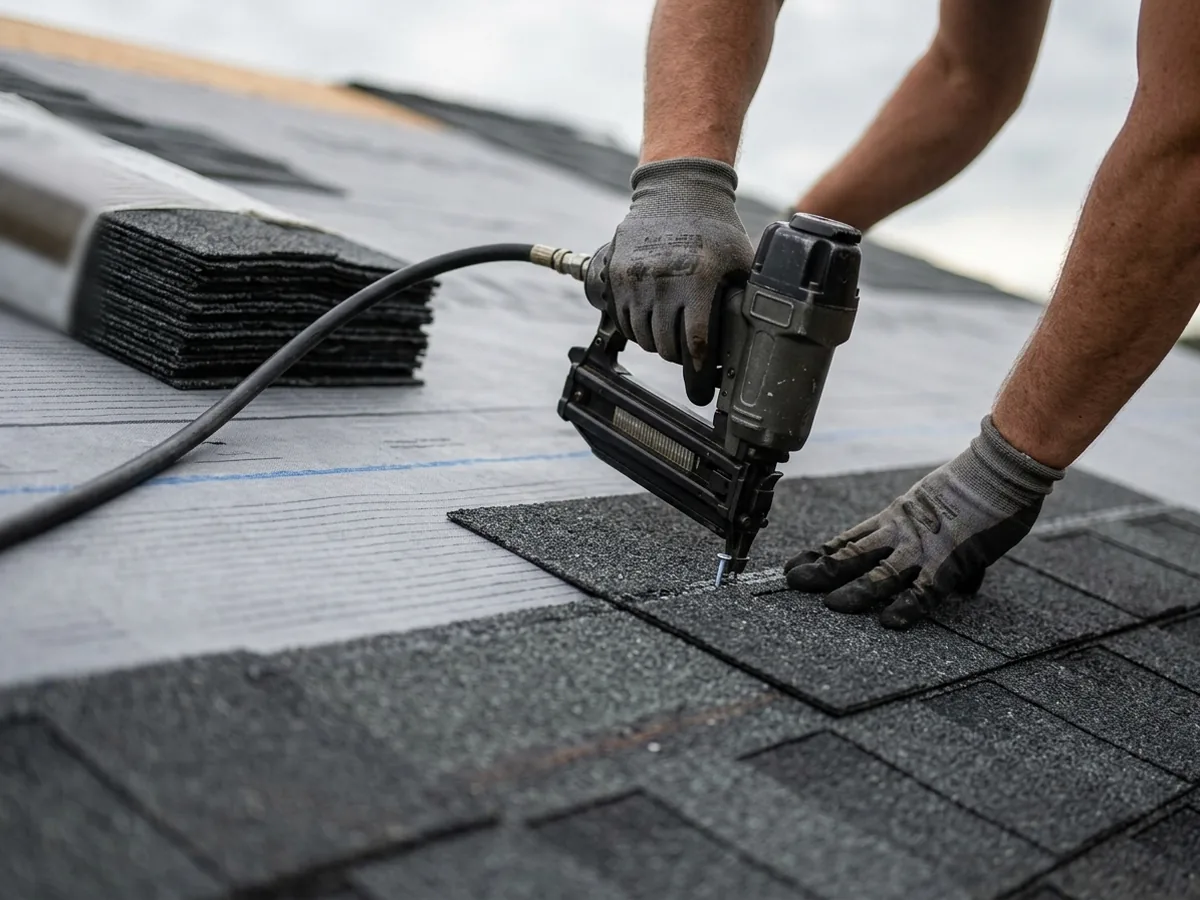
Why Ann Arbor homeowners call Ann Arbor Roofing Co.
- Written estimate, free of charge
- Shingle line, underlayment and ice barrier named in the price
- Deck repair priced per sheet before the tear-off
- One independent local roofer per request, not a call list
- No fee to the homeowner for the referral
How Much Does Roof Repair Cost?
Most minor roof repairs cost $150 to $1,000 in HomeGuide's 2026 national figures: a few shingles, a boot, a small leak caught early. Once water has reached insulation, decking or drywall, the range runs from $1,000 to $6,000 or more. Expect a minimum charge of $150 to $300 even for a small fix.
A few line items from the same HomeGuide guide, for reading a quote:
Flashing repair
$200 to $500Roof deck repair
$200 to $500 per 100 square feetEmergency or after-hours visit
$200 to $300 on top of the repair
What Should a Roof Repair Quote Say?
A useful repair quote names the part that failed and what replaces it: "replace cracked pipe boot on north slope with new flanged boot, reweave shingles," not "fix leak." It should say whether decking will be checked and priced if it's soft, and what happens if the first fix doesn't stop the water.
On older houses, a few more things belong in it. The roof may already carry two layers of shingles, and a patch has to be nailed through both into the deck, which makes a tight repair harder. Wide board sheathing can hide soft spots that only show once a shingle is lifted. And paid work that disturbs painted trim on a house built before 1978 falls under the EPA's lead rules; soffit and fascia repair explains what that means for eave work.
Our view: on a roof with two layers and repeated leaks, get the repair quote and a replacement quote at the same visit. The second number tells you whether the first is worth paying.
Small repairs in Michigan usually don't need a permit, since the code exempts ordinary repairs from any application or notice. When the work turns into a section replacement, the permit and tear-off rules on our roof replacement page apply instead.