
Commercial Roof Systems and the Parts That Leak
A typical commercial roof is low slope: a membrane over rigid insulation over a steel, wood or concrete deck, drained by internal drains, scuppers or gutters at the edge. The membrane choice sets the seams, the repair methods and the price. Residential flat roofs use some of the same products; how they work on a porch or addition is on our flat roofing page.
TPO and PVC Single-Ply
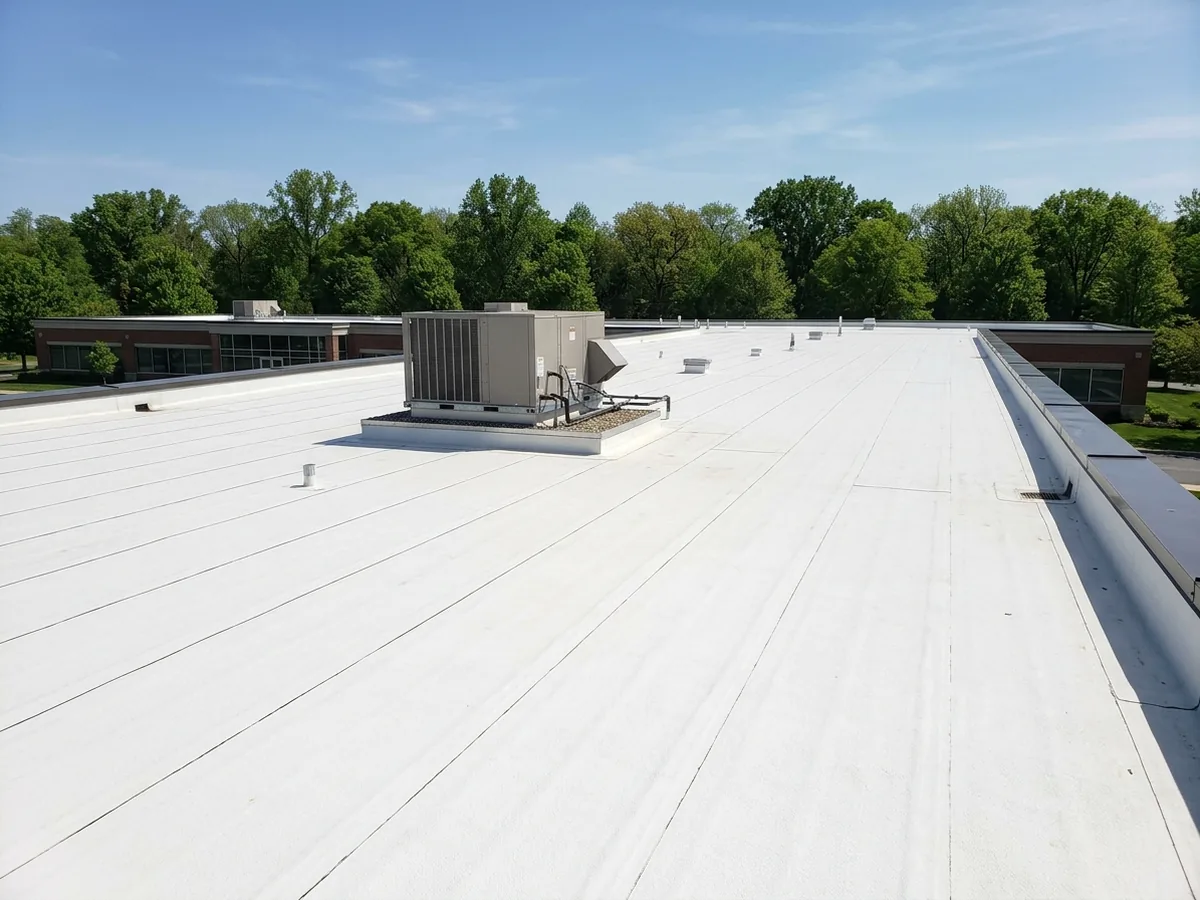
TPO and PVC are thermoplastic sheets, usually white, laid in wide rolls and joined with hot-air welded seams that fuse into one piece. On commercial work they go down three ways: mechanically fastened through the insulation into the deck, fully adhered with bonding adhesive, or loose-laid under ballast. The attachment method matters as much as the sheet, because it decides how the roof handles wind uplift and how easy it is to find a leak later.
HomeGuide calls PVC the most expensive of the rubber-type membranes and also the most durable, at $5 to $12 per square foot installed and 20 to 30 years of life.
EPDM on Commercial Roofs
EPDM is the black rubber membrane. On larger roofs it comes in big sheets, so there are fewer seams, and those seams are taped or glued rather than welded. HomeGuide notes that EPDM and modified bitumen do well in cold climates, which helps on a roof that sees Michigan's freeze-thaw. The weak points are the seams and the flashing at curbs and walls, where adhesive ages first. A ballasted EPDM roof, held down with river stone, hides the membrane and makes leak hunting slow.
Modified Bitumen and Built-Up Roofs
Built-up roofing (BUR) is the old tar-and-gravel roof: alternating layers of felt and hot asphalt, topped with gravel. Modified bitumen is its modern cousin, factory-made rolls of asphalt modified with rubber or plastic, applied by torch, hot mop, cold adhesive or self-adhesive backing, usually in two plies.
HomeGuide prices built-up roofs at $3.50 to $7.50 per square foot with a 20 to 30 year life, and modified bitumen at $4.00 to $7.50 per square foot, lasting 10 to 20 years. Both take foot traffic well, which suits roofs with mechanical equipment that gets serviced often. Our view: an open torch near wood blocking, parapets and old timber is a fire risk, so ask whether the contractor will switch to cold-applied or self-adhered plies at those spots.
Roof Drains, Scuppers and Rooftop Units
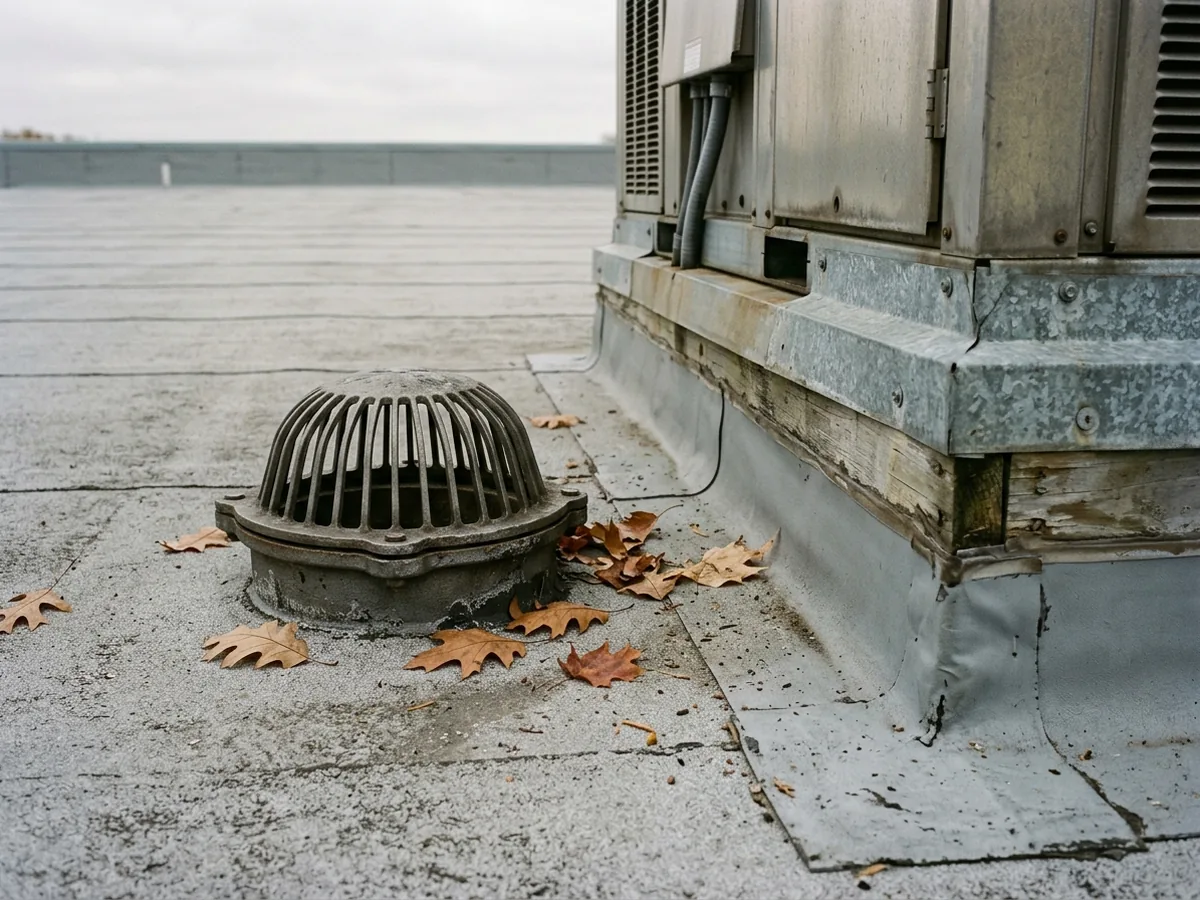
Most commercial leaks start at a penetration, not in the open field of the membrane. Drains clog with leaves and silt, and water ponds around them. Curbs under rooftop units, pipe and conduit supports, and the perimeter edge flashing all move with temperature and pull at their seals.
Michigan's 2021 plumbing code has rules for where water goes when the main drains fail. Where a parapet or raised edge would trap water if the primary drains backed up, the roof needs secondary (emergency overflow) drains or scuppers. Their discharge has to be separate from the primary system and above grade, somewhere the occupants or maintenance staff will see it. Scupper openings must be at least 4 inches high. An overflow that's running is a warning that the main drain is blocked, so it shouldn't be piped out of sight.
A useful repair visit cleans every drain and strainer, checks the curb flashings and pitch pockets, and reports what it found with photos.
Churches, Schools and Nonprofit Buildings
These buildings rarely have one roof. A church often has a steep slate or shingle roof over the sanctuary, flat roofs over later wings, and a bell tower or steeple with its own flashing. A school may have decades of additions, each with a different membrane. Our view: ask for one estimate that covers every roof section by type and age, so the board sees the whole picture and can plan the work in phases.
Two rules come up often. Older church buildings may sit in one of Ann Arbor's historic districts, where matching the existing roof is the easy route; see our slate roof repair page for how that review works. And the EPA's lead-safe rule covers childcare facilities and preschools built before 1978, not only homes, so painted trim on a school or a church with a daycare wing may need a certified firm. The rule's details are on our soffit and fascia repair page.
Why Ann Arbor homeowners call Ann Arbor Roofing Co.
- Written estimate, free of charge
- Shingle line, underlayment and ice barrier named in the price
- Deck repair priced per sheet before the tear-off
- One independent local roofer per request, not a call list
- No fee to the homeowner for the referral
What Does a Commercial Roof Cost in Ann Arbor?
HomeGuide's national guide puts commercial flat roof construction at $4 to $11 per square foot, labor and materials included. Built-up and modified bitumen sit near the low end, PVC near the top. On a 10,000 square foot roof, that range works out to $40,000 to $110,000.
What moves a commercial price: whether the old roof comes off or the new one goes over it, how much of the insulation is wet, crane and staging access, the number of curbs, drains and penetrations, and tapered insulation to fix ponding. A coating over a sound membrane is a cheaper route for some roofs; see roof coating.
Replacing a Commercial Roof Under Michigan's Codes
Commercial buildings follow the 2021 Michigan Building Code, in force since April 9, 2025, and the 2021 Michigan Commercial Energy Code, in force since April 22, 2025. The energy code reaches into re-roofing. When the existing roof has its insulation entirely above the deck, a roof replacement has to meet the code's insulation requirements, and in no case can the replacement lower the insulation's R-value.
In practice, that means the estimate should say what insulation goes back on and its R-value, not just which membrane. Our view: ask for core cuts or a moisture survey before pricing, because wet insulation under a dry-looking membrane is a frequent surprise once a commercial tear-off starts.
For apartment buildings and rental properties, see apartment roofing. For condo associations, see HOA roofing.